

As glass surfaces have grown larger in contemporary architecture, controlling the sunlight that reaches a building has become just as important as letting daylight in. The aluminum sun breaker panel answers exactly that need: it filters direct solar radiation before it strikes the facade, protects the interior from overheating and glare, and gives the building a distinctive architectural rhythm. As one of Turkey's established aluminum extrusion manufacturers, Kenan Metal produces sun breaker profiles alongside a wide family of architectural systems in its own facilities and develops project-specific solutions for architects and contractors. In this article we look at what a sun breaker panel is, how it works, which types exist, where it is used and what you should pay attention to when choosing one.
What Is an Aluminum Sun Breaker Panel?
A sun breaker panel – often called a brise soleil, solar shading blade or louvre – is an aluminum profile mounted in front of a facade, window or roof surface at a calculated angle and spacing. Rather than blocking light completely, it cuts the high-angle summer sun while still admitting low-angle winter sun and diffuse daylight. The result is a facade that stays bright but does not turn into a greenhouse.
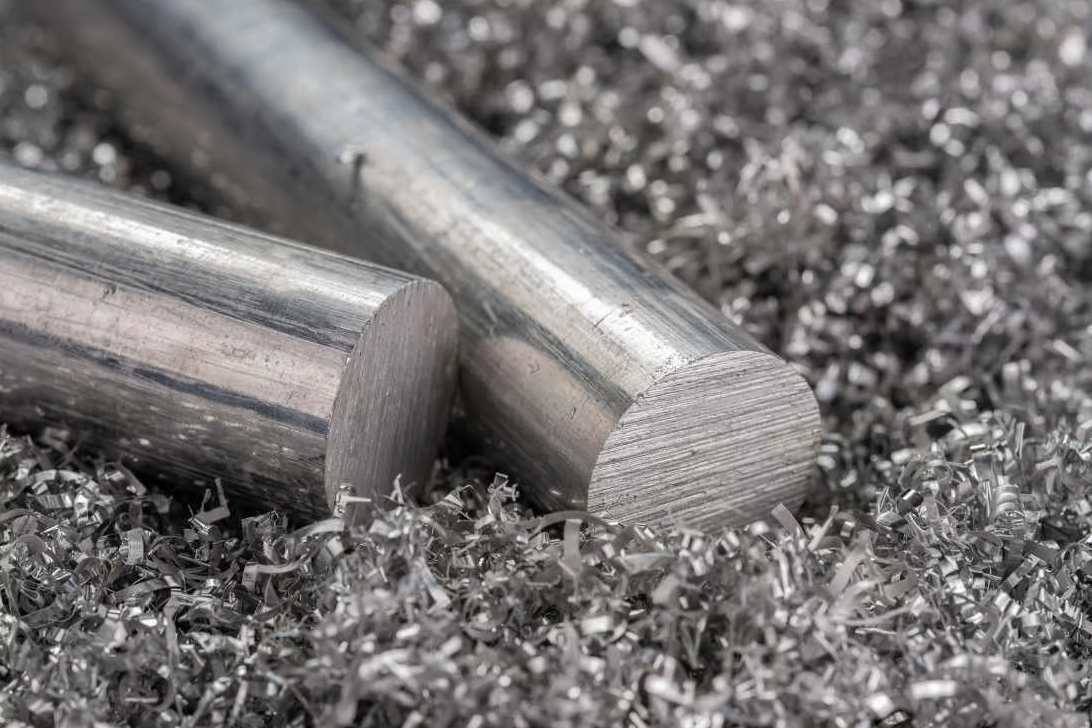
Structurally the system has two parts: the blades themselves, which are extruded aluminum profiles in elliptical, rectangular, aerofoil or Z sections, and the carrier structure of brackets, arms and support profiles that transfers wind loads back to the building. Because both parts are produced from the same extruded alloy family, the whole assembly stays light, dimensionally stable and corrosion resistant. If you want to understand how these profiles are formed in the first place, our overview of aluminum extrusion profile properties explains the process from billet to finished section.
What Does a Sun Breaker System Do?
The short answer is that it manages solar energy. The longer answer covers several benefits that work together:
- It reduces cooling loads. By intercepting radiation before it passes through the glass, a sun breaker system removes a large share of the heat that air conditioning would otherwise have to fight.
- It eliminates glare. Offices, schools, hospitals and showrooms all suffer when direct sun falls on screens and work surfaces. Correctly angled blades diffuse that light.
- It keeps the view. Unlike blinds or opaque cladding, a sun breaker leaves the glass free, so occupants keep their outward view and their daylight.
- It protects interiors. Furniture, flooring and textiles fade far more slowly when ultraviolet exposure is reduced.
- It shapes the architecture. A rhythm of horizontal or vertical blades gives depth, shadow and identity to an otherwise flat curtain wall.
Because these effects translate directly into lower energy consumption, sun breakers are one of the most cost-effective passive design measures available. We explore this relationship in more detail in our article on the role of aluminum profiles in energy efficiency.
Types of Aluminum Sun Breaker Panels
Sun breaker systems are usually grouped by orientation and by whether they move.
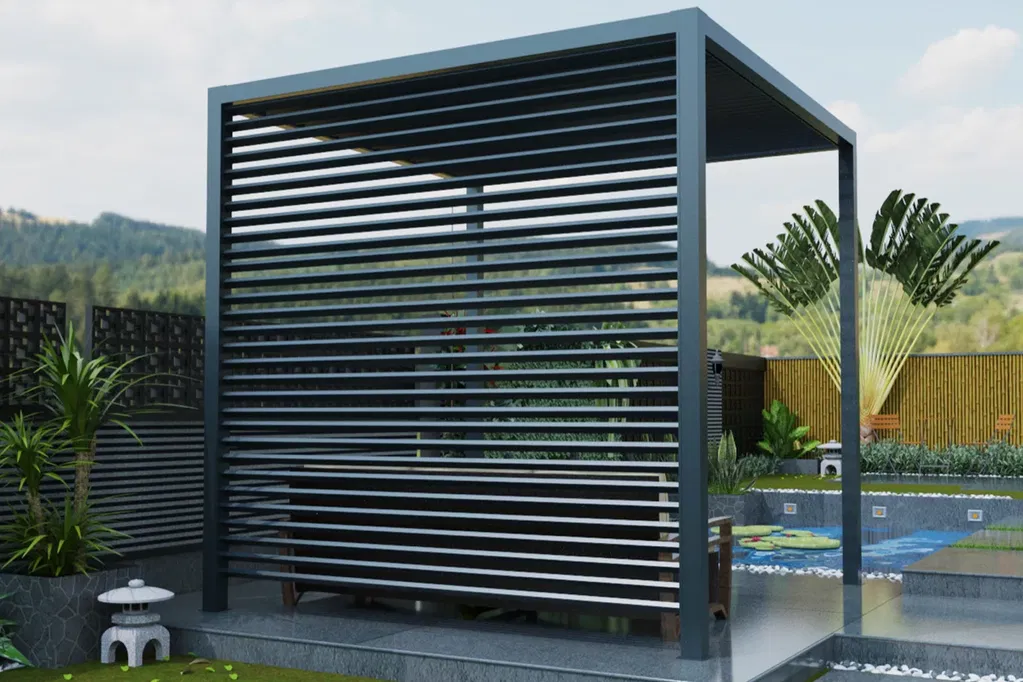
Horizontal sun breakers
Horizontal blades are the classic choice for southern facades, where the sun is high in summer and low in winter. A shallow horizontal projection can block almost all midday summer radiation while letting winter sun reach deep into the room.
Vertical sun breakers
Vertical blades work better on east and west facades, where the sun is low and moves across the elevation. They are also used as full-height screens on stairwells, car park facades and technical volumes that need ventilation as well as shading.
Fixed and movable systems
Fixed blades are set at a single calculated angle and need no maintenance beyond cleaning. Movable or motorised blades rotate to follow the sun or to open completely on overcast days; they cost more but deliver the best year-round performance.
Blade profiles
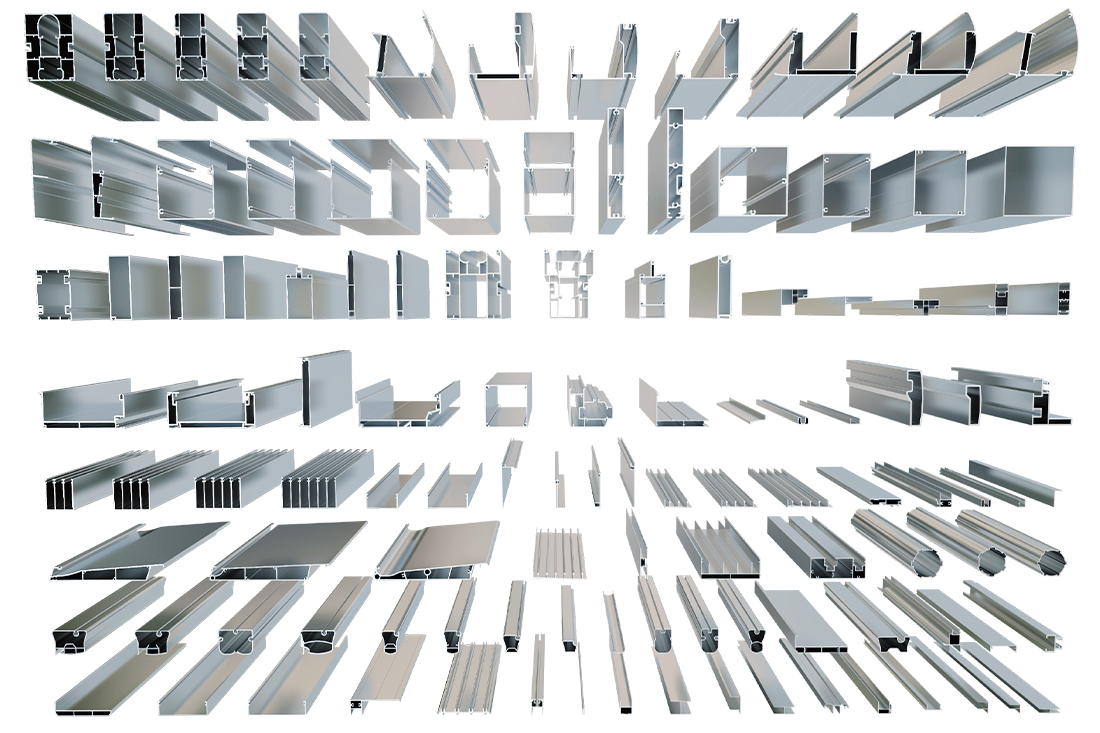
Kenan Metal produces sun breaker blades in several cross sections, including elliptical aerofoil profiles roughly 100 mm and 120 mm wide with wall thicknesses from 1.3 mm to 1.6 mm. The elliptical shape is popular because it looks slim from below, sheds water easily and performs well under wind load. You can see the full range on our solar breaker profiles page.
Why Aluminum Is the Right Material
A shading element lives outdoors for decades, exposed to rain, salt, ultraviolet light and thermal cycling, and it usually hangs from brackets several metres above the ground. That combination rules out most materials. Aluminum wins because it is roughly one third the density of steel, so blades can span further without heavy supporting structure; because it forms a self-repairing oxide layer that resists corrosion; and because extrusion allows complex hollow sections with integrated screw ports and gasket channels to be produced in a single operation.
Extrusion also means geometry is not a constraint. A project that needs a 250 mm aerofoil blade with a particular radius can have a bespoke die produced rather than compromising on an off-the-shelf section. The breadth of what is possible is covered in our guide to aluminum profile usage areas.
Surface Treatment and Colour Options
Raw aluminum is durable but rarely the final look an architect wants. Sun breaker blades are normally anodised or powder coated. Anodising thickens the natural oxide layer and produces a hard, metallic finish in natural, bronze, champagne or black tones. Powder coating opens the whole RAL range plus wood-effect and textured finishes, and modern architectural-grade powders carry long warranties even in coastal environments. For seafront or industrial sites, a marine-grade specification is worth the small extra cost. Our article on surface treatment of aluminum profiles compares the two methods in detail.
Where Are Sun Breaker Systems Used?
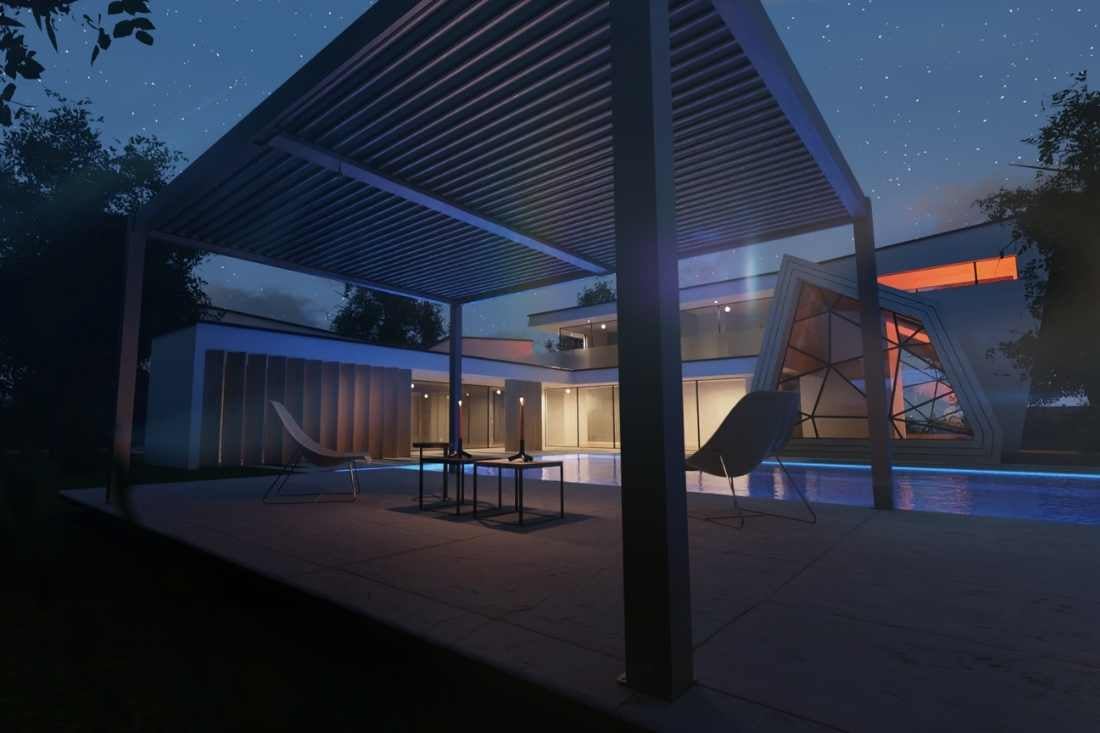
You will find sun breakers on office towers and headquarters buildings, on schools and university blocks where classroom glare is a daily problem, on hospitals, on shopping centres and airport terminals, on hotel facades, on residential blocks with large balconies, and on car parks where ventilation and screening have to happen at the same time. They are equally at home in landscape settings, where a run of blades over a terrace or walkway creates filtered shade without the heaviness of a solid roof. In outdoor living projects they are often specified alongside pergolas and veranda systems; our overview of aluminum pergola systems shows how the two families complement each other.
What to Consider When Choosing a Sun Breaker System
Start with orientation and sun path, because the correct blade depth, spacing and angle can only be calculated once you know which facade you are shading and at what latitude. Next comes wind load: blades act like sails, and the bracket spacing, blade wall thickness and fixing detail all have to be verified against the local wind code. Thermal movement matters too, since aluminum expands roughly 2.4 mm per metre per 100°C, so long runs need expansion joints and slotted fixings.
Then look at the practical details. Can the blades be cleaned safely from a cradle or walkway? Are the fixings stainless steel to avoid galvanic corrosion? Does the supplier control alloy quality, extrusion, surface treatment and machining in-house, or is the chain spread across several subcontractors? Single-source manufacturing usually means better tolerance control and shorter lead times.
Installation and Maintenance
Installation begins with setting out and fixing the carrier brackets to the structural slab or curtain wall mullions, using shims to correct any tolerance in the substrate. Support arms are then bolted to the brackets, and the blades are clipped or screwed into position, working from one end so that alignment errors do not accumulate. A string line or laser check every few bays keeps the rhythm visually perfect, which matters far more on a shading system than on almost any other facade element.
Maintenance is minimal. Washing with clean water and a mild pH-neutral detergent once or twice a year is enough for most inland sites; coastal buildings benefit from quarterly rinsing to remove salt deposits. Avoid abrasive pads and solvent cleaners, which can dull an anodised finish. Fixings should be visually inspected annually, and movable systems need their drives and bearings checked on the manufacturer's schedule.
Frequently Asked Questions
Does a sun breaker make the interior dark?
No. A correctly designed system blocks direct radiation while allowing diffuse daylight through, so illuminance stays comfortable and the view is preserved.
Can sun breakers be added to an existing building?
Yes, provided the structure can carry the additional wind load. Retrofitting shading is one of the most effective ways to reduce cooling energy in older glazed buildings.
How long do aluminum sun breakers last?
With a quality anodised or powder-coated finish and stainless fixings, a service life of 25 years or more is realistic, and the aluminum itself is fully recyclable at end of life.
Are horizontal or vertical blades better?
It depends on orientation. Horizontal blades suit south-facing facades; vertical blades handle the low east and west sun more effectively.
Conclusion
An aluminum sun breaker panel is a small component with a disproportionately large effect: it lowers cooling demand, removes glare, protects interiors and gives a building its architectural character, all without sacrificing daylight or view. Getting it right depends on sun path analysis, correct blade geometry, verified wind performance and a durable finish — and on working with a manufacturer that controls the process from alloy to installed profile. Kenan Metal produces sun breaker profiles and the full range of architectural aluminum systems in its own extrusion, anodising and powder coating facilities, and supports architects with project-specific die design. If you are planning a shading solution for a new or existing building, our technical team is ready to help you specify it correctly.