

Aluminum Extrusion Profile Properties
Discover the properties of aluminum extrusion profiles, from billet to extrusion, through painting and anodizing processes, with Kenan Metal's quality approach.
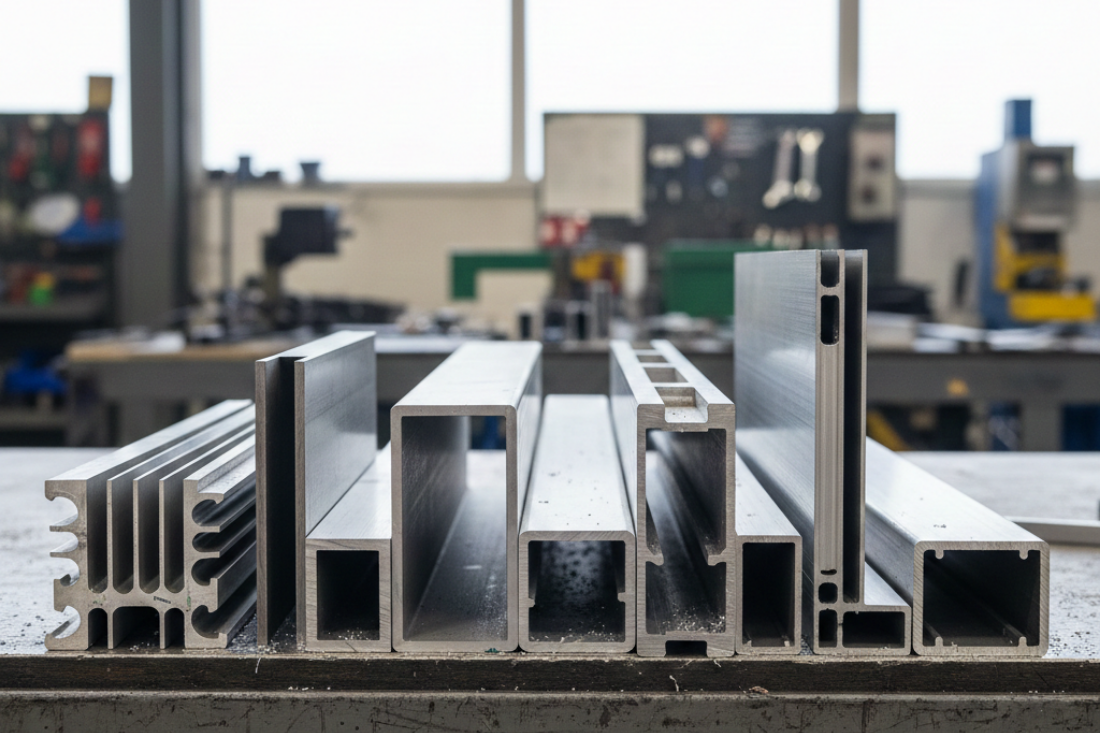
Aluminum extrusion profile features stand out with technical advantages that make them a preferred choice in various fields, from modern architecture to industrial production. When lightweight design, durability, machinability, and long-lasting surface performance are combined with the right alloy selection and precise production processes, the result is solutions that provide both aesthetics and reliability.
The characteristics of aluminum extrusion profiles are not limited to the nature of the material itself; billet quality, the extrusion process, heat treatment, and surface coatings also play a direct and decisive role in aluminum extrusion profile features. Therefore, in architectural projects, "profile selection" essentially means "manufacturer and process selection."
Core Features That Empower Aluminum in Architectural Systems
Behind the popularity of aluminum in architectural and industrial applications lie several critical features:
- Lightweight yet strong structure: While providing ease of transport and installation, aluminum offers confidence in wide spans thanks to its high strength-to-weight ratio.
- Corrosion resistance: Thanks to its natural oxide layer, it is resistant to external factors; this feature is further enhanced by correct surface treatments.
- High reflectivity and aesthetic appearance: Its silvery-white color harmonizes with modern architecture; applications such as anodizing and powder coating preserve this appearance for many years.
- Performance at low temperatures: In the right alloys, mechanical performance remains stable even under low-temperature conditions.
- Production and design flexibility: Thanks to the extrusion method, complex cross-sections can be produced, making slim lines, minimal forms, and special geometries possible.
- Thermal and electrical conductivity: Provides technical advantages in specific applications (alloy and design approach vary according to project needs).
What is a Profile, and Why is Extrusion So Important?
A "profile" refers to a shaped material with a specific cross-section whose length is much greater than its width. Although aluminum profiles can be produced using different methods, extrusion stands out for complex cross-sections and high-volume production.
Extrusion is the process of turning a heated aluminum billet into a profile with the desired cross-section by forcing it through a die under high pressure. This method ensures:
- The ability to produce custom cross-section designs suitable for architectural systems,
- Dimensional repeatability in mass production,
- Sustainable surface quality through the correct process.
Raw Material → Billet → Profile: Where Does Quality Begin?
Quality does not start the moment the profile emerges from the press; it begins much earlier, with the correct management of raw materials. The production chain generally progresses as follows:
1) Aluminum Raw Material and Alloy Management
Alloy selection is a critical step based on the intended use of the profile. In architectural systems, the most common choice worldwide is the 6xxx (AlMgSi) series alloys, known for their excellent extrusion capability and surface performance. This series is particularly noted for achieving successful results in anodizing and coating.
2) Billet Production
The billet is the "starting block" of extrusion. The chemical composition, homogeneity, and casting quality of the billet affect the surface stability, production speed, and mechanical performance of the profile. In short, without strong billet control, it is difficult to maintain consistent quality in the profile.
3) Extrusion (Pressing)
The billet is heated, the die is prepared, and the profile is pressed. If the process window (heat, speed, pressure, cooling) is managed well:
- Surface streaking is reduced,
- Section tolerances become more stable,
- A more homogeneous appearance is achieved in subsequent coating processes.
4) Cooling, Stretching, and Cutting
The profile exiting the press is cooled in a controlled manner, straightened by stretching, and cut to desired lengths. These steps are vital for accuracy and assembly compatibility, especially for long profiles.
5) Heat Treatment (Tempering / Aging)
In alloys like the 6xxx series, heat treatment is applied to bring mechanical performance to the target level. If this process is applied correctly, the profile will have:
- More stable hardness values,
- More reliable strength behavior,
- More consistent assembly performance.
Surface Quality: Why are Coating and Anodizing Critical?
In architectural systems, the "external appearance of the profile" often determines the perceived quality of the product. However, the surface is not just about aesthetics; it is also a protective layer against external conditions.
Durable Color and Protection with Powder Coating
Powder coating is a robust solution for architectural applications in terms of UV resistance, scratch resistance, and color stability. With correct pre-treatment and process control, stable performance is targeted for facades and outdoor systems over many years.
Long-Lasting Surfaces with Anodizing (Anodic Oxidation)
Anodizing increases corrosion resistance and preserves the architectural appearance for a long time by creating a controlled oxide layer on the aluminum surface. Layer thickness and "sealing" quality are the two critical parameters determining the durability of the anodized finish.
Where Are Aluminum Profiles Used?
The application areas for aluminum extrusion profiles are quite extensive. The most common examples include:
- Architecture and Construction: Facade systems, pergola and bioclimatic solutions, door and window frames, winter gardens, railings, and load-bearing sub-constructions.
- Transportation: Automotive and rail system components, lightweight constructions.
- Machinery and Equipment: Chassis, carrier bodies, modular systems.
- Electricity/Energy: Applications requiring conductivity and heat management in specific designs.
Kenan Metal Approach: Process Discipline in Production, Consistent Quality in Results
One of the primary reasons Kenan Metal is preferred in architectural and industrial projects is that it links quality not to a "single stage," but to end-to-end production discipline. From billet quality to extrusion process management, and from coating applications to anodizing processes, every step is handled with the goal of consistent dimensions, stable surfaces, and performance that meets project expectations.
The practical equivalent of this approach is as follows: In large-scale projects or recurring productions, the same appearance and assembly compatibility are expected for the same cross-section. This is achieved not just through material selection, but through a culture of production.
Frequently Asked Questions
What is the most critical quality criterion in architectural profiles?
Generally, three headings stand out: surface appearance, dimensional tolerances, and coating quality (paint/anodizing). Priorities may change depending on the project type.
Does anodizing or powder coating make more sense?
It depends on the application site. External conditions, desired color/aesthetics, maintenance expectations, and the architectural concept determine this decision. In many projects, both solutions yield long-lasting results with the correct process.
Why do "different tones in the same color" occur?
Small variations in alloy, surface preparation, process temperatures, and line conditions can cause tone differences. This is why mass production planning and process standardization are essential.