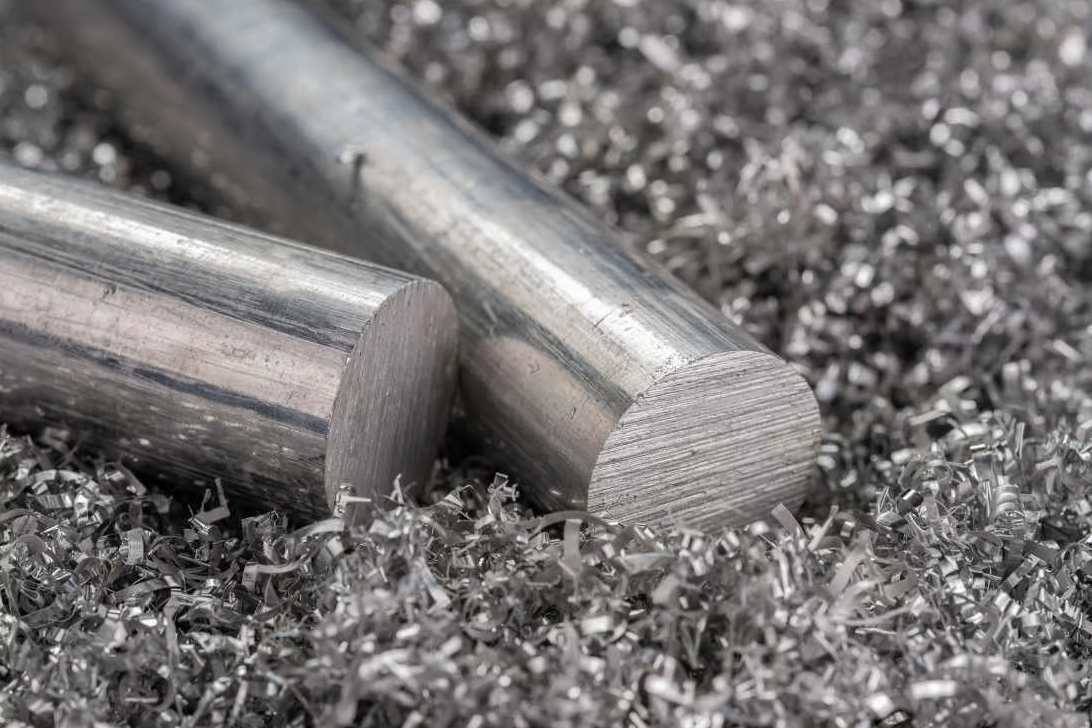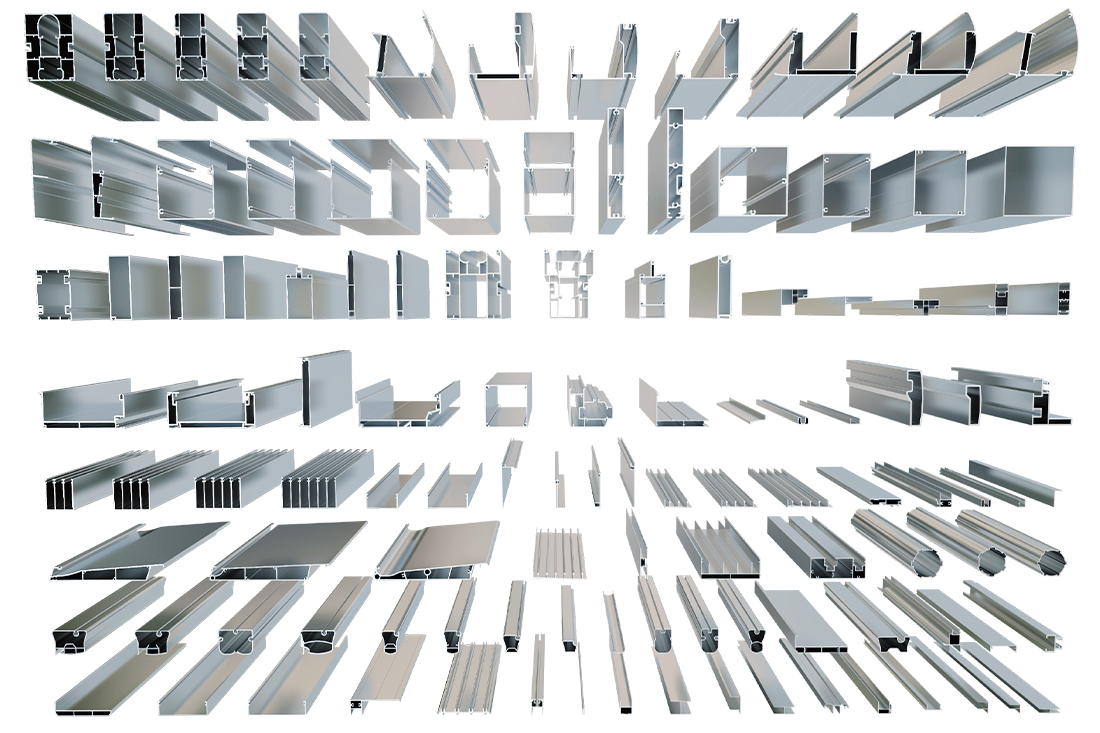


There is a single component that determines how an aluminum profile looks, how much load it carries, what tolerance it holds and how easily it assembles on site: the extrusion die. No matter how powerful the press, how clean the billet or how experienced the operator, if the die is designed wrongly the resulting profile will be wrong as well. That is why a phrase is often repeated in the extrusion industry: the profile is the signature of the die.
At Kenan Metal we have been producing custom-shaped aluminum profiles for more than twenty years, and we design and machine a significant part of the dies we use in our own tool shop. In this article we explain what an extrusion die is, which types exist, which steps it goes through from design to first trial, how it is maintained, and what working with a manufacturer that has an in-house tool shop brings to a project.
What Is an Extrusion Die?
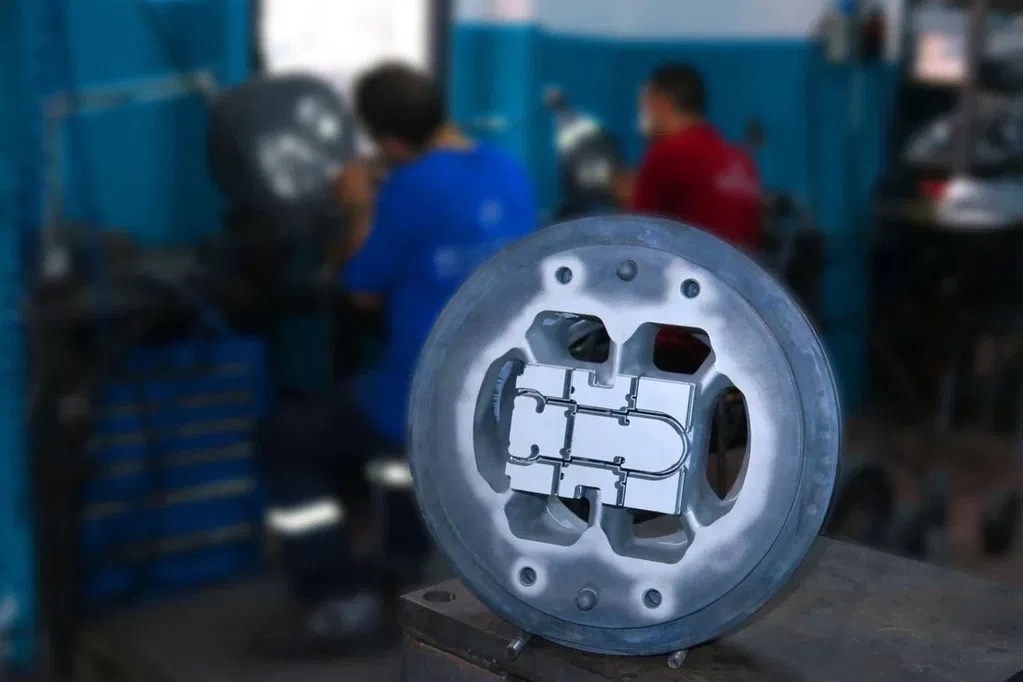
An extrusion die is the steel tool through which a heated aluminum billet is forced under high pressure and which gives the profile its final cross-section. The billet, heated to roughly 450-500 °C, is placed in the container of the press and pushed by the ram. The metal flows out through the die opening much like toothpaste from a tube; the shape that emerges is the shape of the die aperture.
Dies are usually made from H13 grade hot work tool steel. This steel is chosen because it retains hardness at high temperature, resists thermal fatigue and stands up to wear. During its life a die heats up and cools down thousands of times, and every cycle adds fatigue load to the material. We covered the general working of the extrusion process in our article aluminum extrusion and aluminum profiles.
Die Types: Solid, Hollow and Semi-Hollow
Solid dies are the simplest group. The profile contains no enclosed void; flat bars, angles, T sections and most decorative profiles fall into this group. The die is a single piece and the metal passes straight through the aperture.
Hollow dies are used for profiles containing enclosed voids, such as box sections, tubes and multi-chamber architectural profiles. These dies are made of two parts: the metal is first split by bridges and then rejoined in the welding chamber under high pressure. The joints are called weld lines, and their quality directly affects both the strength of the profile and its appearance after anodizing.
Semi-hollow dies are used for profiles with deep channels that open outwards through a narrow mouth. Guide rails and screw ports are typical examples. This is the group where the load on the die tongue is highest and therefore the risk of breakage greatest; the tongue ratio requires particular attention at the design stage.
How Is a Die Made? Step by Step in the Tool Shop
1. Section design and simulation. The process starts with a review of the profile section supplied by the customer. Wall thickness distribution, perimeter-to-area ratio and the balance centre of the section are evaluated. The aim is uniform metal flow across the section; a speed difference between thin and thick areas shows up as twist and bow in the profile. At this stage flow simulation is used to pre-dimension the feeder channels and the bearing zone.
2. CNC machining. The approved design is machined on CNC centres into turned steel blocks. Feeder ports, bridges and the welding chamber are produced at this stage.
3. Wire and sinker EDM. The aperture that forms the final section of the profile is cut on a wire EDM machine to micron level accuracy. Corner radii and narrow channels are completed with sinker EDM.
4. Heat treatment and nitriding. The machined die goes through hardening and tempering. Nitriding is then applied to increase surface hardness and wear resistance. Nitriding depth is a critical parameter: too little and the die wears early, too much and the surface becomes brittle.
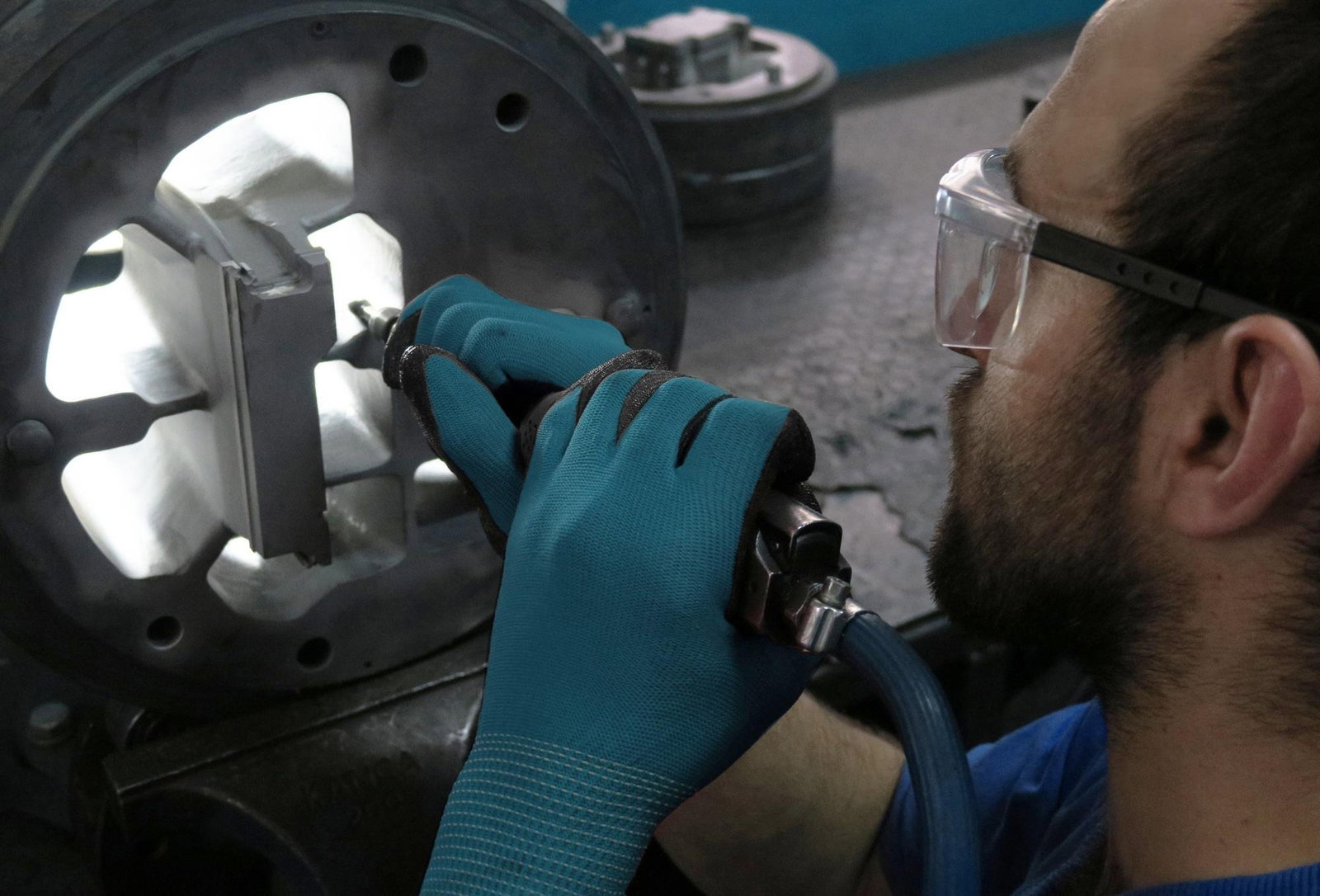
5. Trial run and correction. The die is tried on the press, the resulting profile is measured, and if necessary the bearing zone is corrected by hand to balance metal flow. Bringing a die to production readiness usually takes several trial cycles. We described this whole meticulous process in our article from design to delivery: the custom aluminum profile journey.
How Does the Die Work on the Press?
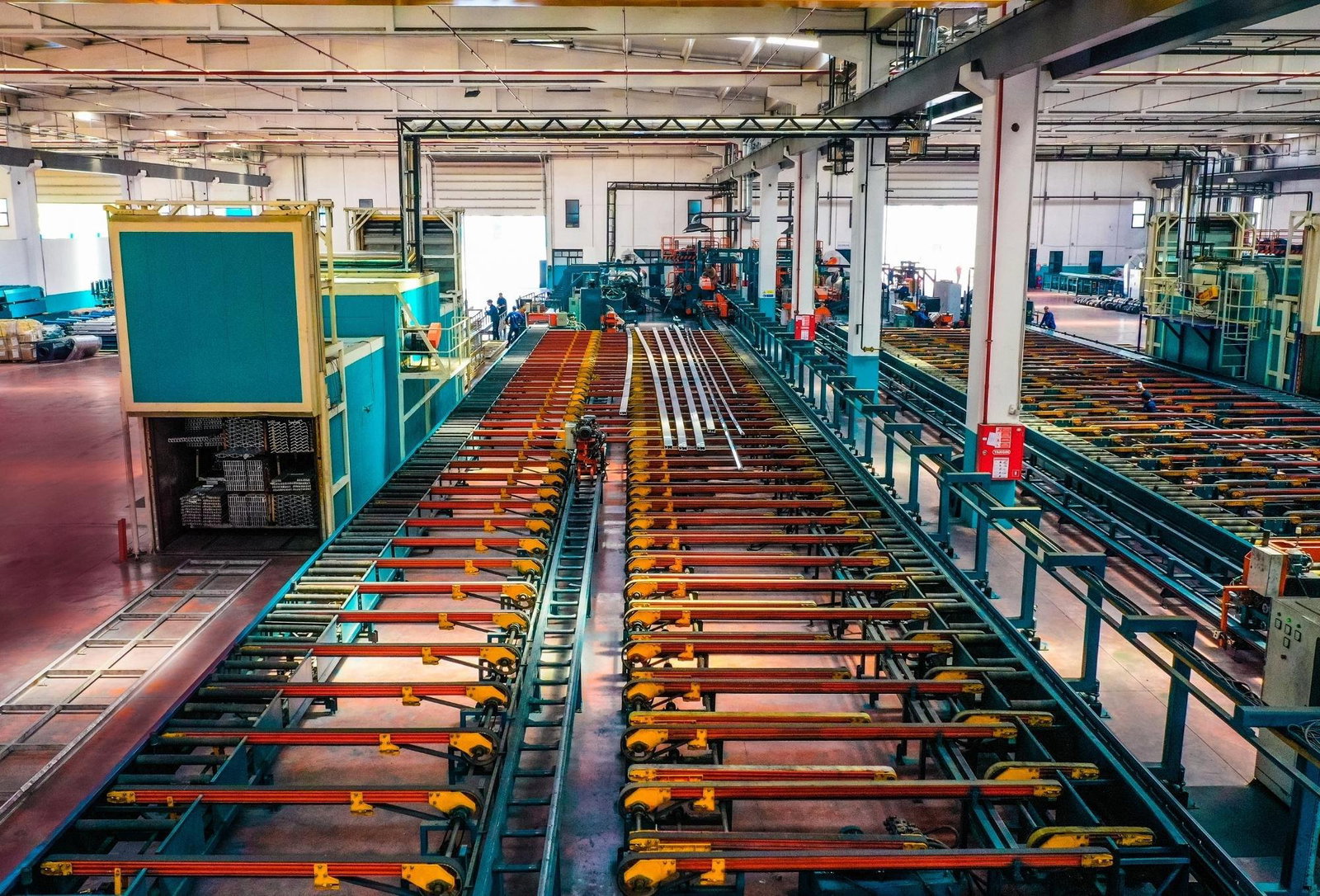
On the press the die is placed in a tool stack with a backer and a bolster behind it. The die is preheated in an oven to around 480 °C; sending hot metal into a cold die both spoils surface quality and subjects the die to thermal shock.
The extrusion ratio, that is the billet cross-sectional area divided by the profile cross-sectional area, is the fundamental variable of the process. As the ratio rises, the required pressure and the heat generated rise as well. Exit speed is determined by the alloy and the section geometry; too high a speed causes tearing and cracking on the surface, too low a speed simply means lost productivity.
The profile leaving the die passes through the cooling zone and reaches the stretcher. Stretching relieves internal stresses and provides straightness. Cutting to length and the ageing oven follow. We discussed billet quality, the first link in this chain, in our article on aluminum billet production, and the last link, surface treatment, in our article on anodizing and painting techniques.
Die Maintenance, Cleaning and Service Life
After every press cycle a certain amount of aluminum remains inside the die. This residual metal is dissolved by soaking the die in a caustic soda solution; steel is unaffected by caustic while aluminum dissolves. After cleaning the die is rinsed, dried and inspected visually.
The main points checked during inspection are polishing and wear marks on the bearing zone, crack initiation at bridge roots, deposits in the welding chamber and deformation of the tongues. Dies that reach the wear limit are sent for re-nitriding, but the number of nitriding cycles is not unlimited; each repetition makes the surface slightly more brittle.
The life of a die varies with section complexity, alloy and press parameters. A simple solid die may deliver hundreds of thousands of metres of profile, while a thin-walled multi-chamber architectural section shortens that life considerably. Keeping a proper die record system makes it possible to see in advance how many cycles each die has run and when it needs revision.
Section Features That Make Die Design Harder
Unbalanced wall thickness: Having 1.2 mm and 5 mm walls in the same section makes the metal flow at different speeds. The remedy is to vary bearing lengths in the die.
High tongue ratio: Deep and narrow channels lengthen the die tongue, which is the part most likely to break. Support geometry and enlarged radii are used in the design.
Sharp corners: Internal corners with zero radius create stress concentration in the die and increase crack risk in the profile. Even a small radius extends life noticeably.
Sections far from the centre: Profiles placed asymmetrically with respect to the billet centre experience unbalanced flow; feeder channels are repositioned accordingly.
Multi-chamber thermally broken sections: Polyamide barrier channels are extremely tolerance sensitive; deviations of a tenth of a millimetre in channel width cause problems during assembly.
The Advantage of Working With an In-House Tool Shop
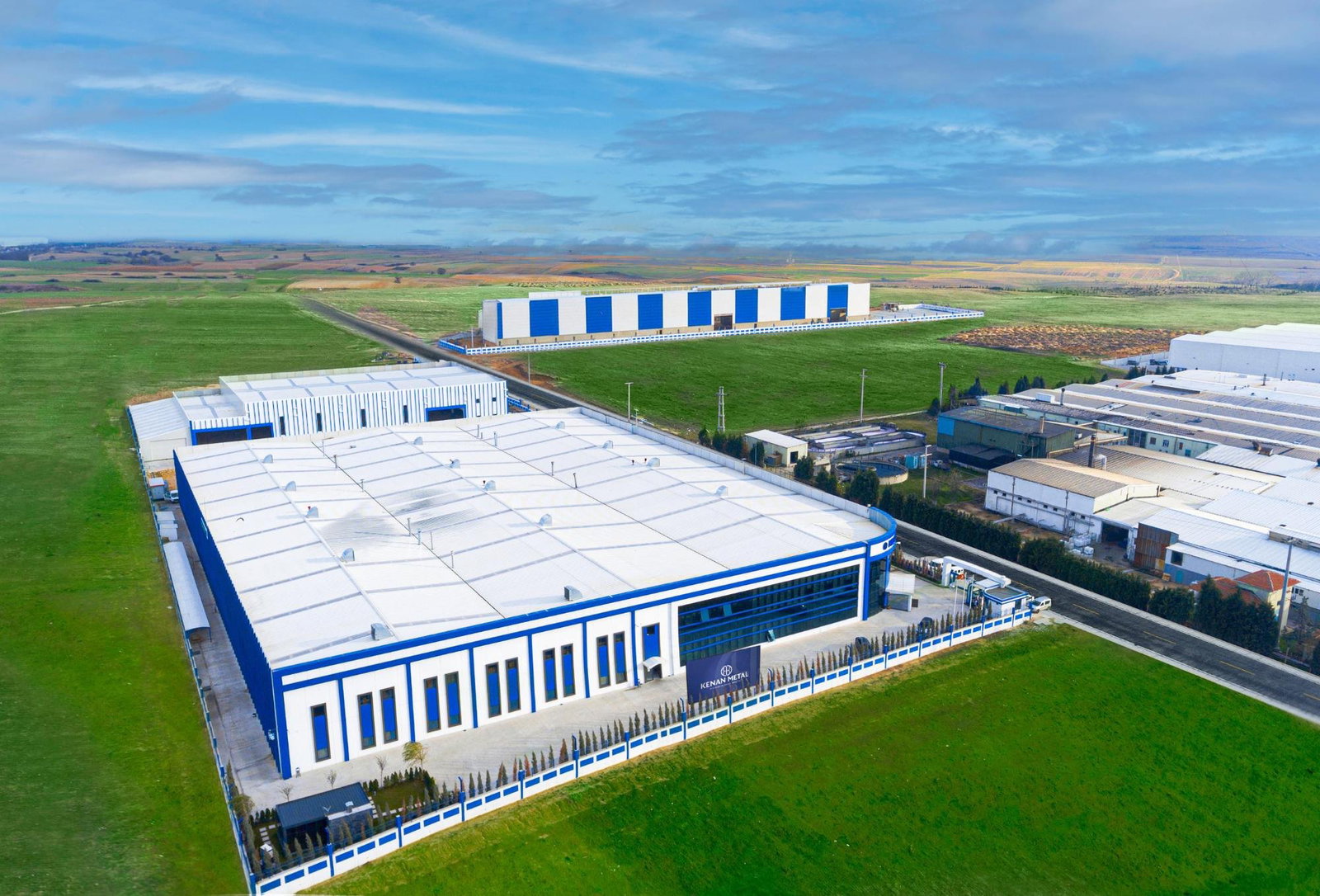
An extruder that buys dies from outside has to send the die back to its supplier and wait for its return in order to correct a deviation found during a trial run. That loop is usually measured in days. For a manufacturer with an in-house tool shop the same correction is a matter of a few hours.
This speed advantage is felt concretely in three areas. The first is new product development: the time from prototype to series production shrinks. The second is urgent spare die requirements: a broken die can be replaced quickly. The third is projects with tight tolerances: a few microns of fine tuning on the section can be carried out with a measure-and-correct loop inside the same facility.
You can find detailed information about our tool shop on our die manufacturing facility page. The criteria to check when evaluating an extrusion supplier are listed in our article on what to look for when choosing an aluminum extrusion manufacturer. If you are curious about how die design affects moving systems, our article on rolling roof systems is a good example.
Frequently Asked Questions
How long does a new die take? It depends on section complexity, but the period from design approval to the first trial run is usually a few weeks.
Who pays for the die? Common industry practice is to charge the die cost to the customer once for custom sections; subsequent orders cover only the profile price.
Can the same die be used with different alloys? It can, but because flow behaviour changes with the alloy, parameters must be reset and a trial run is usually required.
What happens if a die breaks? A broken die usually cannot be repaired and a replacement is machined. That is why keeping a spare die for critical profiles is common practice.
What is the minimum wall thickness? Depending on alloy and section width, 1.0-1.2 mm is generally accepted as the lower limit for architectural profiles; thinner walls require special design.
Conclusion
The extrusion die is the invisible but decisive component of aluminum profile production. Every step from section design to wire EDM, from nitriding to the trial run, directly affects the dimensions, surface and service life of the resulting profile. Getting the die right makes every subsequent process easier; getting it wrong cannot be compensated at the press, in the coating line or on site.
By carrying out die design and manufacturing in its own facilities, Kenan Metal keeps this critical step under direct control. Contact our team for your custom section requirements and explore our product groups on our products page.