

Among the solutions that make outdoor areas usable in all four seasons, the rolling roof stands out. From restaurant terraces to hotel gardens, from villa verandas to café seating areas, the same three needs keep repeating: shade when the sun hits, protection when the rain starts, and an open sky when the weather is perfect. A fixed roof answers only one of these. A rolling roof system turns the roof surface itself into a moving component and answers all three.
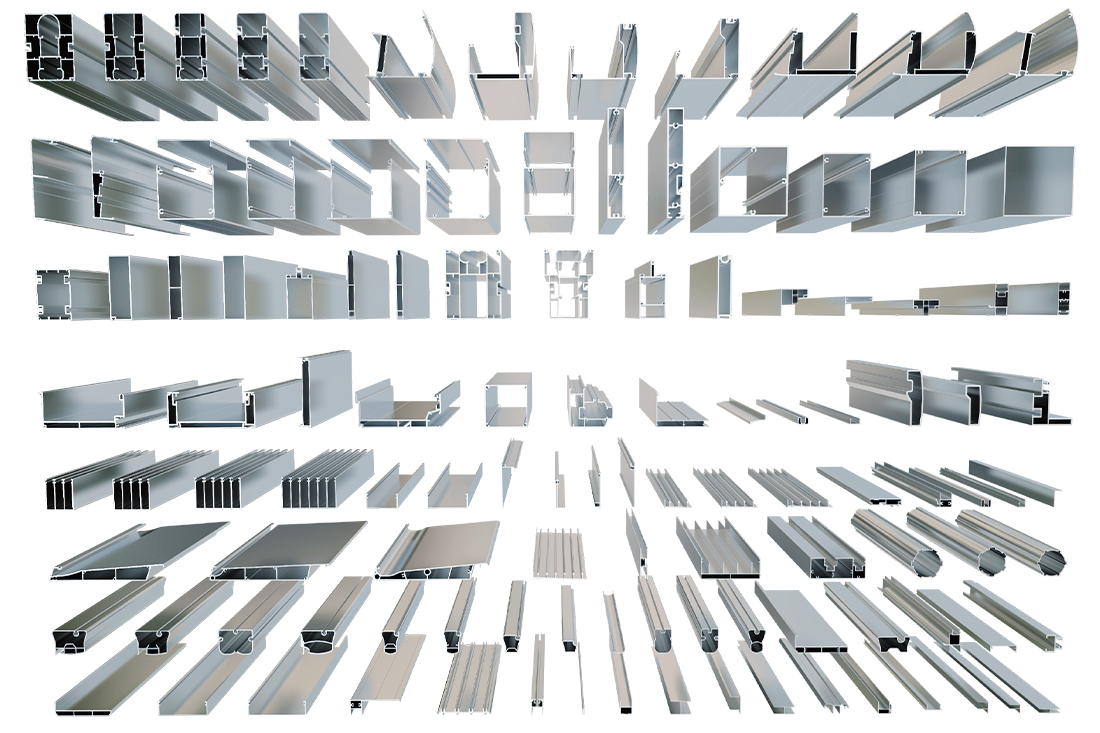
At Kenan Metal we have been designing, developing and manufacturing custom-shaped aluminum extrusion profiles for more than twenty years. Rolling roof systems are a direct output of that production line: from the load-bearing column to the louvre profile, from the guide channel to the water drainage detail, every component of the system is extruded as an aluminum profile. In this article we explain step by step what a rolling roof is, how it works, which types exist, and what to look for when specifying one for a project.
What Is a Rolling Roof System?
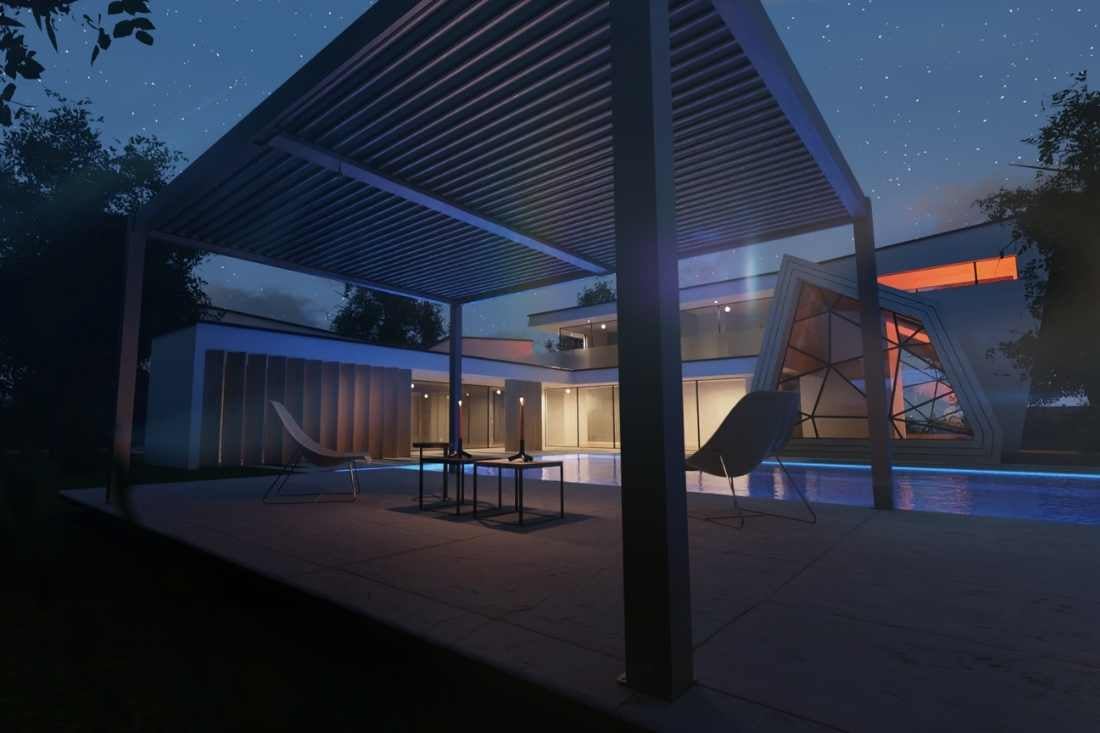
A rolling roof, also called a movable or retractable roof, is an outdoor covering system whose roof surface can open and close. The skeleton of the system consists of aluminum columns and beams; on top of this skeleton sit louvres, panels or glass units that move by means of a motorised or manual mechanism. When the user presses a button, the roof surface folds away, opens, or changes its angle.
This definition separates the product both from a classic awning and from a fixed canopy. An awning is fabric based and carries limited wind load; a fixed canopy closes the span permanently and cuts off the sky for good. A rolling roof combines the structural strength of aluminum with a moving mechanism, so structural capacity and usage flexibility come together in a single product. We covered the wider material argument in our article on why aluminum is the preferred material for modern architectural systems.
How Does a Rolling Roof Work?
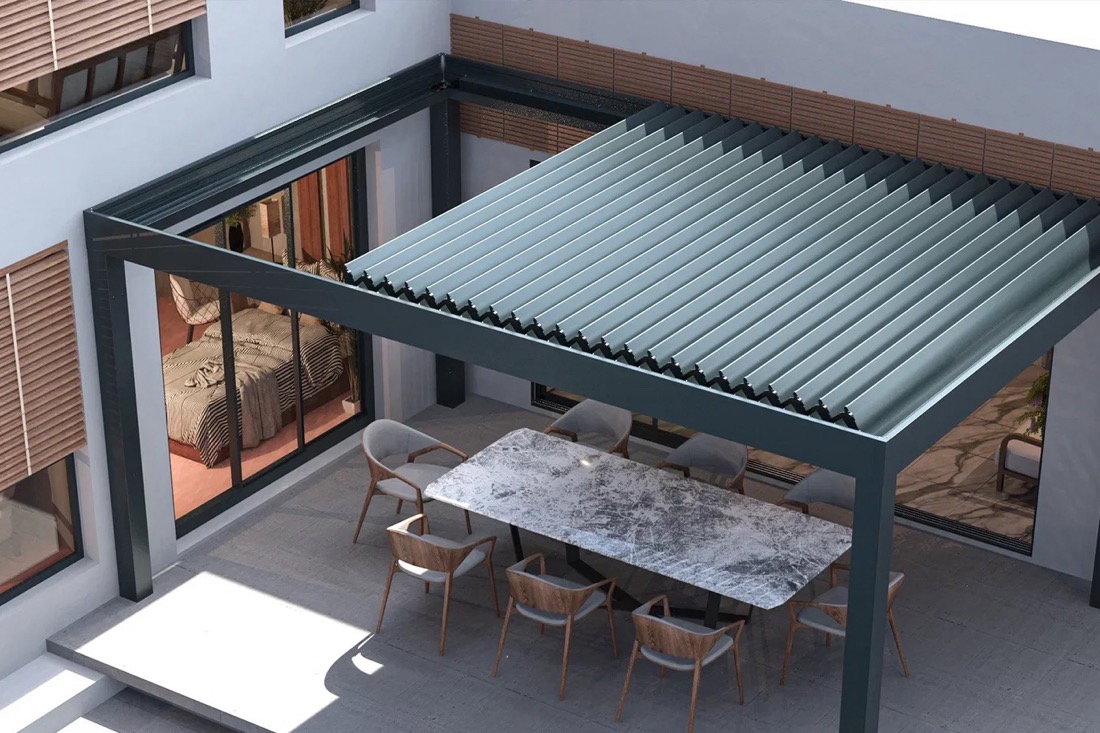
The working principle of a rolling roof rests on three main components: the load-bearing frame, the movement channel and the drive mechanism. The load-bearing frame is the set of aluminum columns and beams that transfers snow and wind loads to the ground. The movement channel is the guide bed extruded into the beam profile; the louvre or panel slides along this bed. The drive mechanism produces the motion through a geared motor, a rack, or scissor arms.
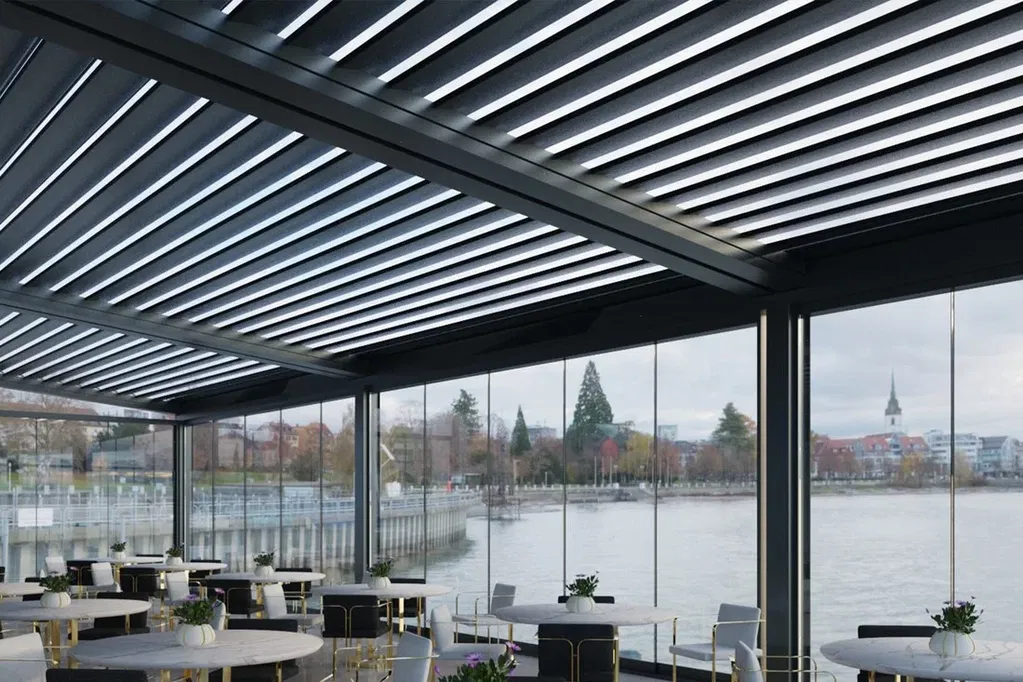
In scissor type systems the louvres are linked by arms and pack together; in the open position they occupy a small volume at one end of the span, and in the closed position they cover the surface completely. In scissorless types each louvre rotates on its own axis, and the openness of the surface is set by the louvre angle. In both cases rainwater is guided from a hidden channel inside the beam profile into the columns, and from the columns into the ground drainage. This water management detail looks like the simplest part of the system but is engineering-wise the most critical one: if the channel section is undersized the water overflows, and if the slope is miscalculated water stagnates inside the channel.
Motorised systems can also be equipped with rain and wind sensors. When the sensor detects rain the roof closes automatically; in strong wind the system moves to a safe position. In commercial venues this automation protects the space without requiring staff intervention.
Rolling Roof Versus Fixed Pergola
A fixed pergola covers the span with a certain shading ratio and cannot change that ratio. A rolling roof can adjust the shading ratio anywhere from zero to one hundred percent. In practice this difference directly affects how many days a year the space can be used: fully open in spring, fully closed at noon in summer and partially open on autumn evenings, all from the same product.
That said, the two systems are not rivals. In many projects a fixed pergola creates a wide shaded area while a rolling roof makes the most intensively used part of that area flexible. You may want to read our article on innovative eco bioclimatic solutions and our overview of Castle Cube veranda systems alongside this one.
Opening Glass Roof: The Transparent Alternative
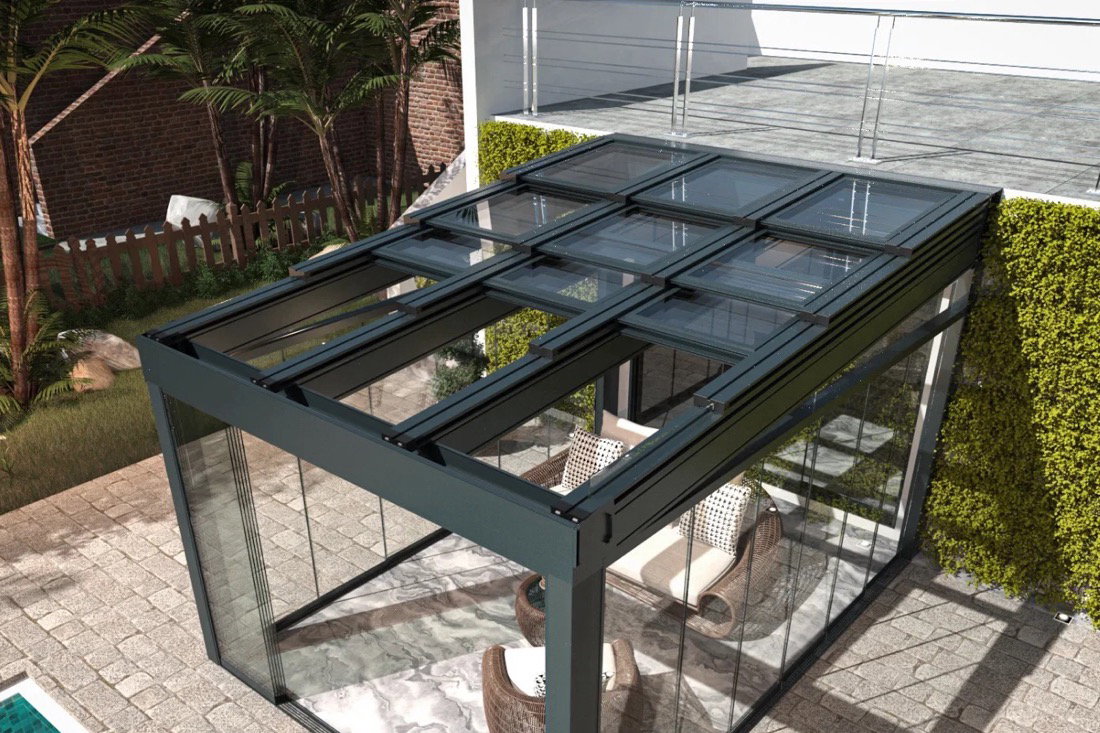
Some projects require the roof to transmit daylight even when it is closed. Winter gardens, glass verandas and transition areas connected to hotel lobbies are typical examples. Opening glass roof systems were developed for exactly this need: instead of louvres, laminated or tempered glass units are used, and the glass slides along aluminum guide profiles so that the units stack over one another.
In a glass roof the profile section carries a higher load than in a louvred system. The weight of the glass unit, the seating surface of the gasket and the wear resistance of the guide channel are calculated together. That is why wall thickness and alloy selection become decisive in opening glass roof projects. If you would like to see other systems where glass and aluminum work together, our article on guillotine glass balcony systems is a good starting point.
The Role of the Aluminum Profile in Rolling Roof Systems
The performance of a movable roof is directly related to the geometry of the profile used. Guide channel tolerance, torsional resistance of the louvre, buckling capacity of the column and the seating surface of the gasket are all resolved in the cross-section designed in the extrusion die. A well designed section keeps the system running quietly and smoothly for years; a poorly designed one comes back in the very first season as squeaking, jamming and water leakage.
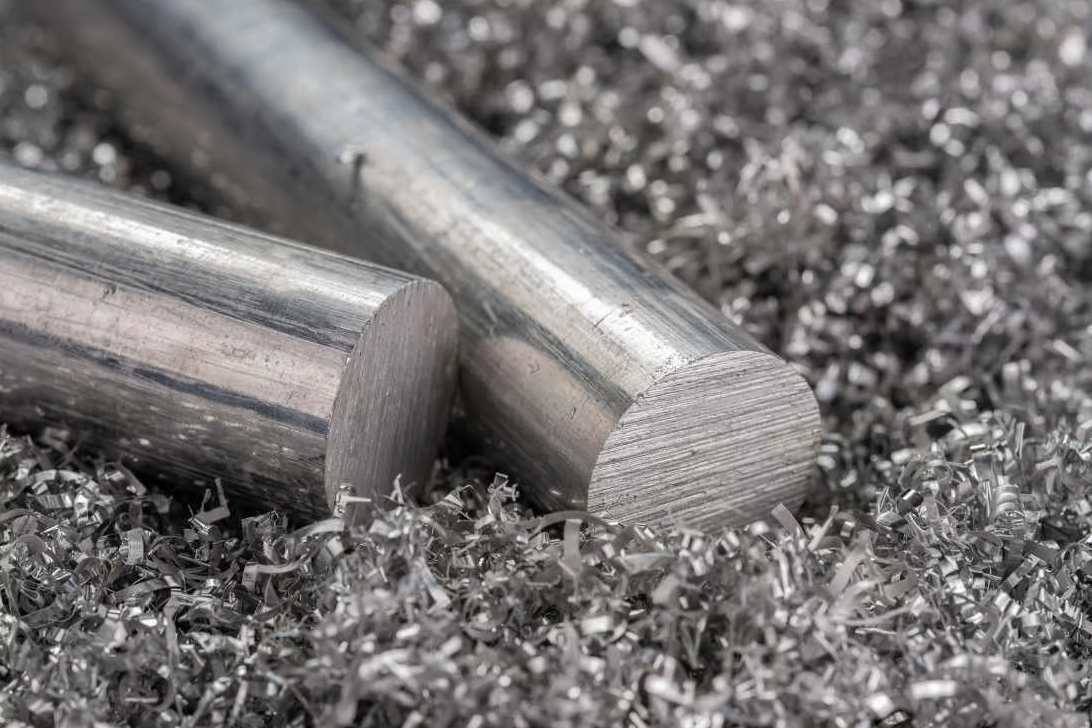
Aluminum has three decisive advantages here. The first is weight: being far lighter than a steel section of the same strength, it reduces motor load and inertia in moving parts. The second is corrosion resistance: the oxide layer that forms naturally on the surface provides built-in protection for systems exposed to open air, and anodizing or electrostatic powder coating strengthens that protection further. The third is formability: thanks to extrusion, the guide rail, gasket seat, screw channel and drainage channel can be combined into a single profile section, which reduces both assembly time and part count.
For the technical details of the load-bearing profiles you can review our rolling roof profiles page. The contribution of surface treatment to durability is covered in detail in our article on anodizing and painting techniques.
Where Are Rolling Roofs Used?
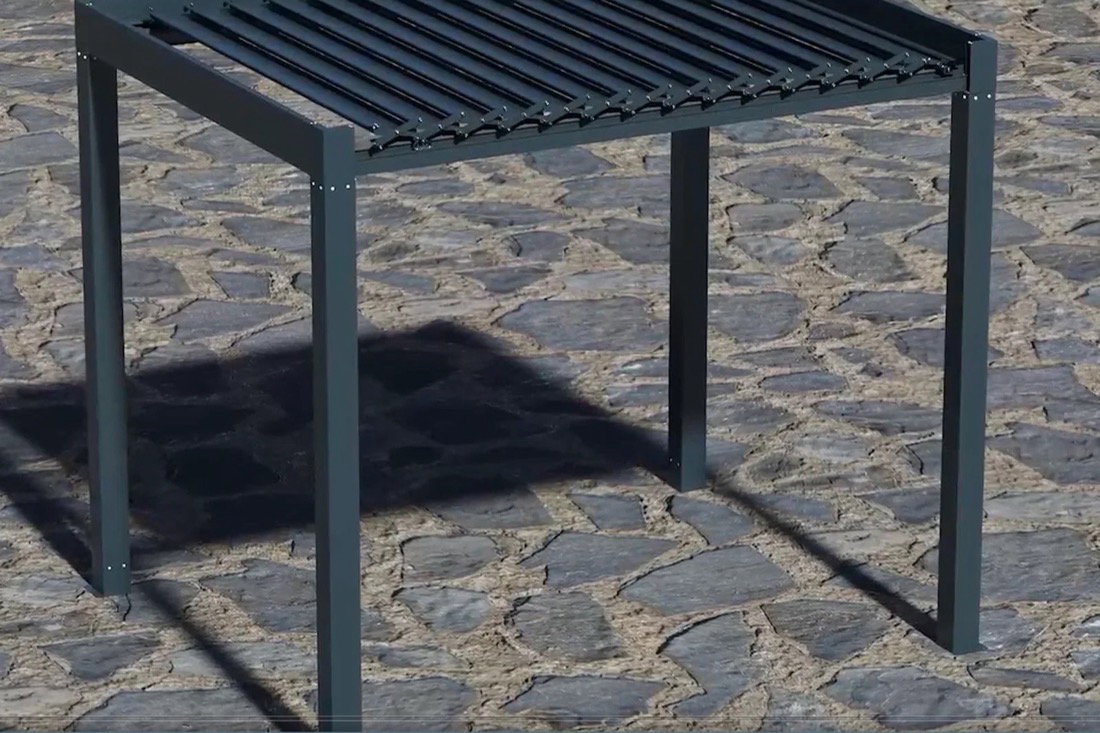
Commercial venues are where rolling roof systems are used most intensively. On restaurant and café terraces the system keeps seating capacity available all year round; tables that do not empty on a rainy evening translate directly into turnover. In hotels, pool surroundings, breakfast terraces and event areas are solved in the same way.
On the residential side, villa verandas, rooftop terraces and garden seating areas come to the fore. Here the expectation is mostly aesthetic: the system is coated in the same colour as the façade, the columns are kept as slim as possible, and the mechanism is made invisible. In public projects, bus stops, school yards, hospital entrance canopies and car park covers can be listed.
What all these applications share is a load calculation that changes with the size of the span. A four metre villa terrace and a twelve metre restaurant span cannot be solved with the same profile section. That is why span, snow load, wind zone and louvre pitch are evaluated together at the design stage.
What to Consider When Choosing a Rolling Roof
Wall thickness: Two systems that look identical in a catalogue can behave completely differently because of a wall thickness difference. Make sure the wall thickness of the column and the main beam matches the span.
Alloy and temper: In architectural systems 6063 and 6005A alloys are widely used. Beams carrying high loads call for the higher strength option.
Water drainage: Ask whether the channel section suits local rainfall intensity and whether in-column drainage is provided. A system solved with an external visible pipe is a step backwards both aesthetically and in terms of maintenance.
Gaskets and seals: The tightness achieved when the louvres close depends on the correct positioning of the gasket seat on the profile. Ease of gasket replacement matters in the long run.
Surface treatment: In aggressive environments such as coastal or industrial zones, thick anodizing or a high quality powder coating should be preferred.
Manufacturing depth of the supplier: A supplier that extrudes the profile in its own plant and produces the die in its own tool shop is far faster in revision and spare part processes. We elaborated on this in our article on what to look for when choosing an aluminum extrusion manufacturer.
Maintenance and Service Life
Rolling roof systems are not maintenance free, but the routine is quite simple. Cleaning leaves, dust and sand deposits out of the guide channels twice a year is usually enough to keep the movement quiet. Sand accumulating inside the channel is the single biggest cause of wear.
Checking the drainage channels at the end of autumn is the most valuable task before winter. In motorised systems, limit switches and sensors should be tested at the start of the season. Salt and lime stains on the surface should be removed with pH neutral cleaners; abrasive products damage the anodic layer.
A properly specified and regularly maintained aluminum system has a service life measured in decades. At the end of that life aluminum can be remelted without losing its properties. We discussed this loop in our article on the aluminum circular economy in construction.
Frequently Asked Questions
Does a rolling roof carry snow load? Systems with a correct structural calculation are engineered according to the regional snow load. In heavy snow regions the louvre pitch is tightened and the beam section is enlarged.
Does the system stay open during a power cut? Motorised systems offer a manual crank or an uninterruptible power supply option; it should be requested at the design stage.
Does it make noise in the wind? If the gasket and seal detail is resolved correctly, louvre vibration and whistling are largely prevented. The most common cause of noise is loosened fasteners.
Is colour choice limited? Electrostatic powder coating offers a wide RAL range, while anodizing offers natural, champagne, bronze and black tones.
Can it be added to an existing pergola? It is possible if the existing structure can carry the load, but in most projects renewing the structure as well is the safer solution.
Conclusion
Rolling roof systems replace the traditional solutions that confine an outdoor area to a few months of the year with an adjustable covering logic. The success of the system is largely hidden on the side you do not see, namely in the cross-section design of the aluminum profile: when guide tolerance, water channel, gasket seat and load-bearing geometry are set up correctly, the system runs trouble free for years.
Kenan Metal extrudes every component of its rolling roof systems in its own facilities and manages the process from die design to surface treatment under one roof. Contact our team for the profile section, alloy and surface treatment combination that suits your project, and explore our product groups on our products page.