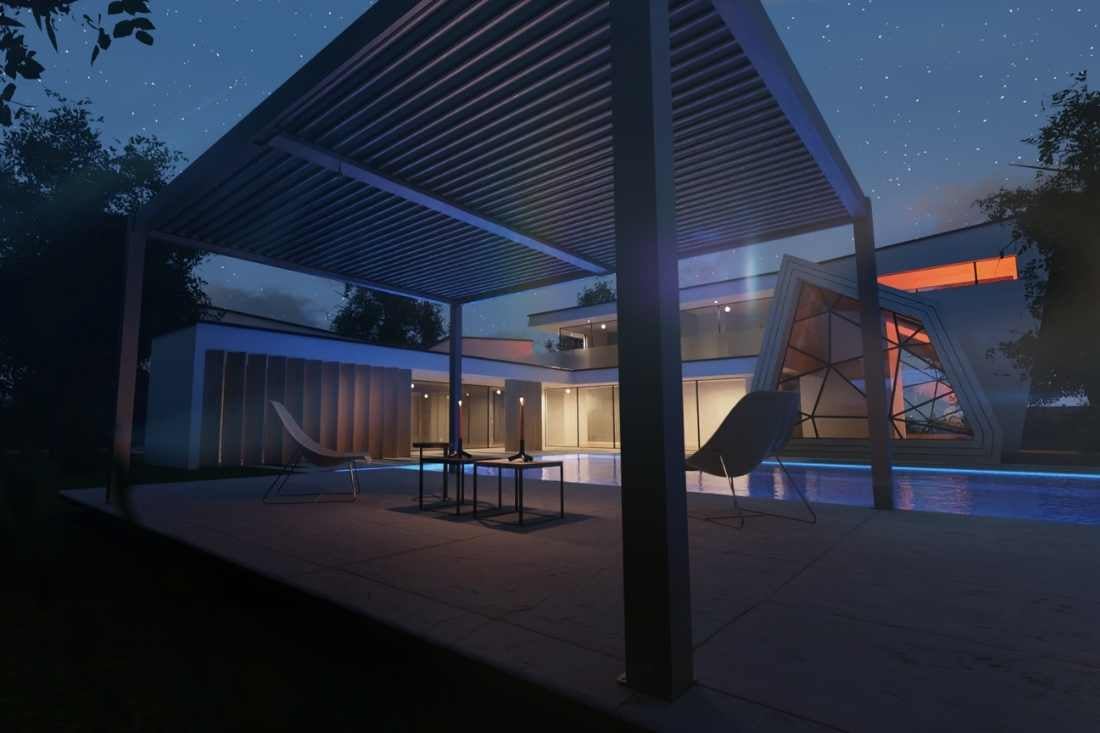


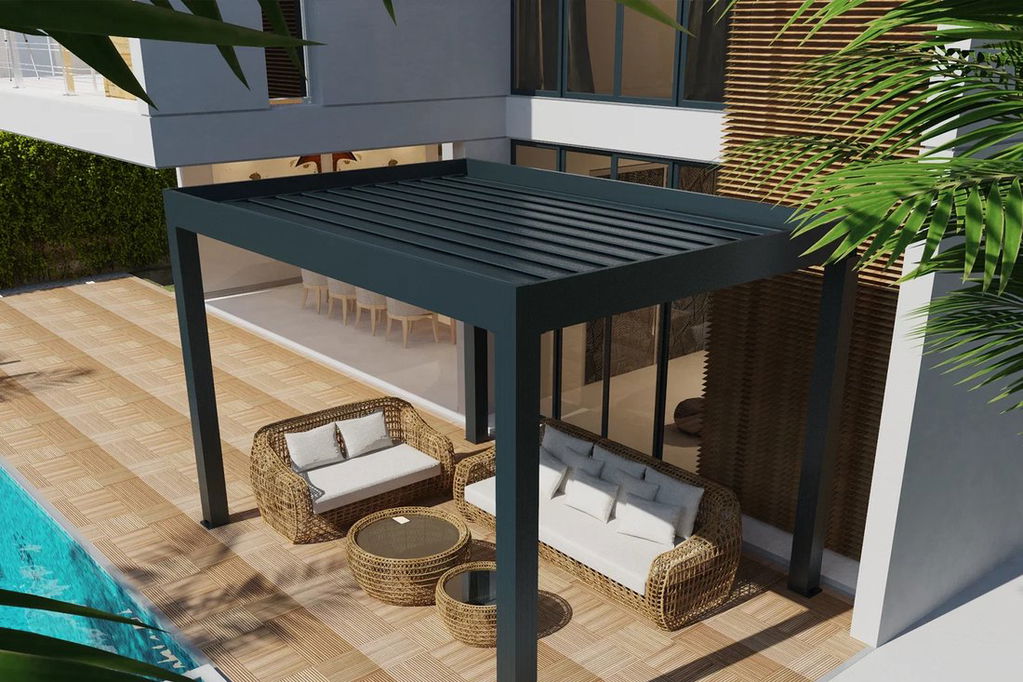
Having spent the summer as the most used spot on the terrace, in the garden or in front of the restaurant, an aluminum pergola faces a different test as October arrives. Rain, wind, falling leaves, frost and, in some regions, snow demand a different kind of performance from the structural profiles, the moving louvers, the motor and the sensors. The good news is that aluminum, given the right maintenance, is one of the materials that copes best with winter conditions. The bad news is that small neglected jobs, such as a blocked gutter or a dried-out seal, can turn into annoying faults in the middle of winter.
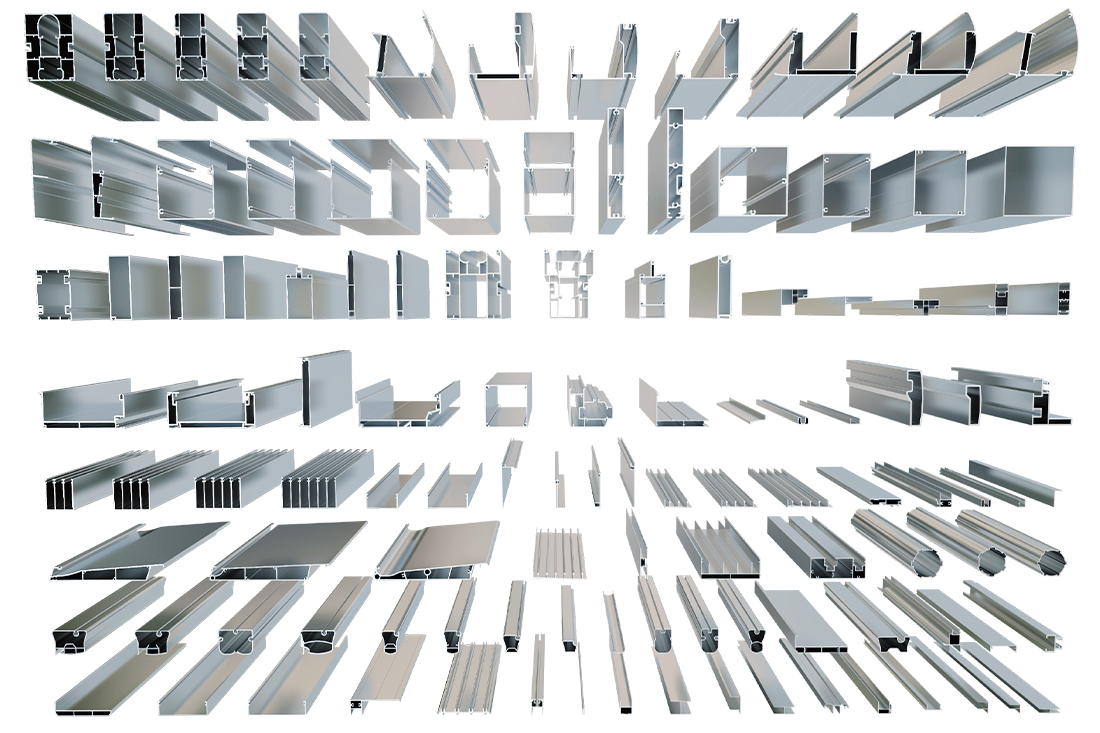
At Kenan Metal we manufacture the aluminum profiles used in pergola, bioclimatic and rolling roof systems. In this article we have put together, as a practical checklist, the maintenance steps you can take at the end of the season regardless of who installed your system, the position in which the louvers should be kept in winter, and when you should call in a specialist.
Why Is Pre-Winter Maintenance Important?
Aluminum does not rust; the thin oxide layer that forms naturally on its surface protects it against corrosion. Powder coating or anodizing takes this protection one step further. That is why most pergola owners assume the system needs no maintenance. A pergola, however, is not made of aluminum profiles alone: gaskets, brush seals, bearings, shafts and gears, the motor, the rain sensor, LED lighting, cable connections and drainage pipes are all part of the system.
The risks these parts face in winter are well known. Leaves collecting in the gutters stop water from flowing, and the water overflows across the louvers or the edge profiles. Water left in a drainage pipe expands as it freezes. Dried-out seals vibrate and rattle in the wind. Dirt and salt building up on the surface gradually dull the coating. One or two hours of regular maintenance at the end of the season prevents most of these problems and noticeably extends the life of the system.
Clean the Surface Correctly: Protecting Powder Coating and Anodizing
The first step of maintenance is to remove the dust, pollen, bird droppings and dirt that have built up over the summer. The powder coating or anodized finish on aluminum profiles is very durable, but it can easily be scratched or dulled by the wrong cleaning products.
- Use lukewarm water and a mild, pH-neutral detergent. Bleach, thinners, acetone, acidic descalers and abrasive creams damage the coating.
- Choose a soft sponge or microfibre cloth. Wire brushes, scouring pads and abrasive pads must never be used.
- If you use a pressure washer, work at low pressure and from at least 50 cm away, and never aim the jet directly at the seals or the motor area.
- After cleaning, rinse the surface with plenty of clean water and dry it. Detergent residue can leave marks when it dries.
Systems installed by the sea, around swimming pools or on busy streets accumulate salt and pollutants faster. In these environments surface cleaning is recommended once a season rather than once a year. For more information on coating types and their durability, see our article on anodizing and painting techniques.
Clean the Gutters and Drainage Channels
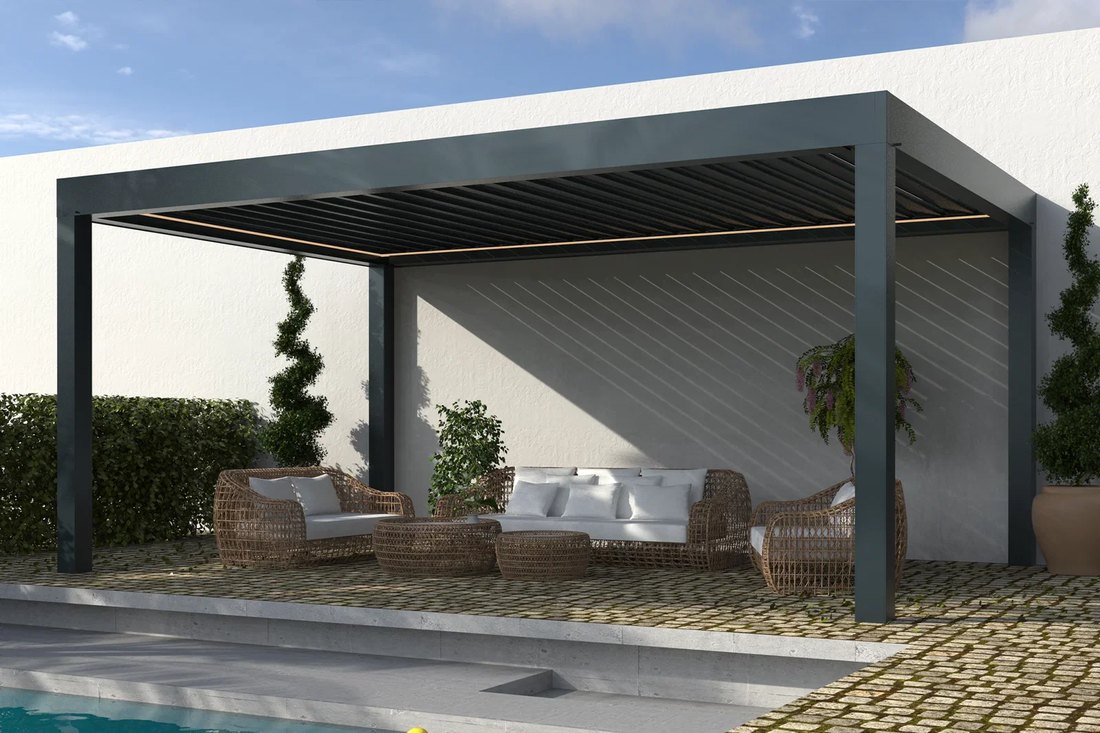
In bioclimatic pergolas, when the louvers are closed, rainwater is directed through the channels at the ends of the louvers into the perimeter beams and from there into drainage pipes running inside the columns. Because this system is hardly used during the summer, problems usually appear with the first heavy shower. Leaves, pollen and dust falling in autumn collect in the channels and block the water's path.
Before winter, you should:
- Set the louvers to the fully open position and clean the gutter channels in the perimeter beams by hand or with a soft brush.
- Check the inlet of the drainage pipe inside the column. Slowly pour a bucket of water into the gutter and watch whether it flows freely out at the base of the column.
- Make sure the outlet at the foot of the column is not covered by soil, gravel or plants. No water should collect at the outlet, because of the risk of freezing.
- Remove leaves and dirt lodged in the small water channels at the ends of the louvers.
If drainage is impaired, water trapped in the column can expand as it freezes and put strain on the fixings. That is why checking the drainage is the single most important step in winter maintenance. We explain the water management logic of bioclimatic systems in more depth in our article on the bioclimatic pergola.
Louvers, Mechanism and Motor
The heart of a system with moving louvers is the mechanism that rotates them. It usually consists of a motor, a push rod or shaft, and bearings at both ends of the louvers. At the end of the season, open and close the louvers fully several times and observe the movement:
- Do the louvers rotate at the same angle and at the same time? If one lags behind, there may be dirt in a bearing or a loose connection.
- Is there any rubbing, squeaking or catching noise during movement? Sand and dust in the bearings should be cleaned out, and no lubricant other than the one recommended by the manufacturer should be used.
- When the louvers are fully closed, do the gaskets between them seat properly? Light leaking through indicates a shifted or worn gasket.
- Does the motor sound different from usual? If you notice that the motor is straining, stop operating the system and contact your installer.
In rolling roof or sliding roof systems, cleaning the rail channels is particularly important. Sand and leaves collecting in the rails prevent the wheels from moving freely. You can find out how these systems work in detail in our article on rolling roof systems.
Louver Position in Winter: Snow, Wind and Frost
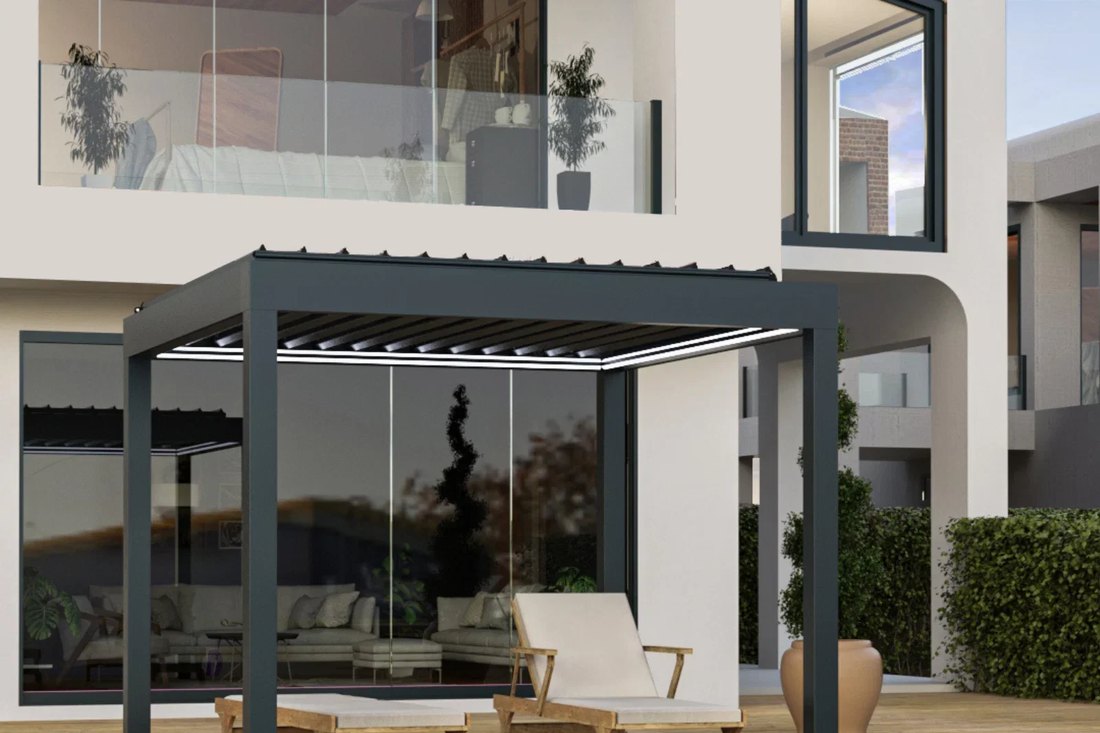
The most frequently asked question about winter maintenance is whether the louvers should be kept open or closed in winter. The answer depends on your region and the design of your system, but there are some general principles.
In regions where snow is expected: Snow accumulating on closed louvers places a considerable load on the system. Many manufacturers recommend turning the louvers to a vertical or open position before heavy snowfall, so that the snow falls between them and does not build up. Always ask your installer for the snow load your system is designed to carry. When removing accumulated snow from the louvers, do not use hard shovels or metal tools.
On nights with a risk of frost: Moving wet louvers in freezing temperatures can damage the gaskets and the motor. Do not try to force open louvers that are iced up; wait for the temperature to rise. In some systems a frost sensor provides this protection automatically.
In strong winds: Systems with a wind sensor move the louvers to a safe position above a certain wind speed. If there is no sensor, set the louvers to the position recommended by the manufacturer yourself when a storm warning is issued, and retract the side screens.
In short, there is no single rule such as "keep the louvers closed every winter" or "keep them open every winter". Consider your system's user manual together with the climate of your region.
Side Enclosures: Glass, Zip Screens and Seals
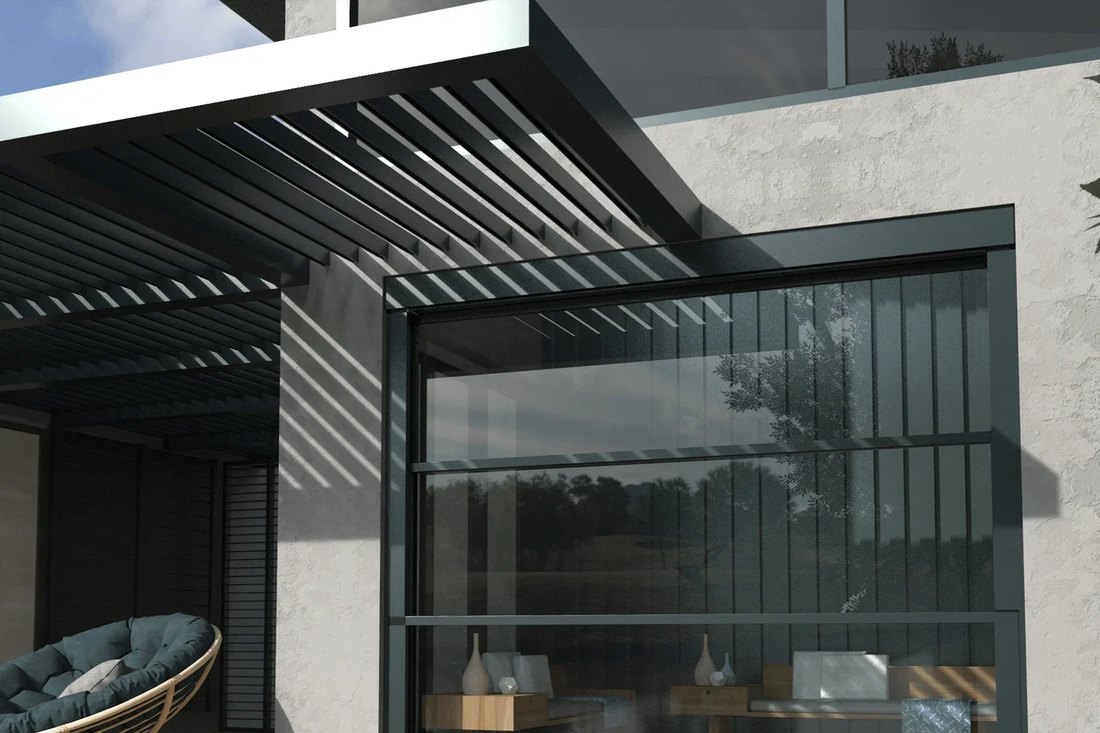
Many pergolas are enclosed at the sides with guillotine glass, sliding glass or zip screens so that they can also be used in winter. These side enclosures directly determine the winter performance of the system.
- Glass systems: Vacuum dust and sand from the tracks and wipe the glass with a cleaner that does not contain alcohol or ammonia. Check that the seals are still flexible; cracked or hardened seals let air and water through. In guillotine systems, make sure the motor and belt connections work properly.
- Zip screens: Clean the fabric with lukewarm soapy water and do not roll it up until it is completely dry. Fabric rolled up wet can develop mould and stains. Check that the zip strip has not come out of the side channels.
- Seals and gaskets: Wipe rubber gaskets with a damp cloth; you can keep them supple with a silicone-based protective spray recommended by the manufacturer. Oil-based products can make rubber swell.
If you want to use your pergola all year round, see our article on guillotine glass systems and our zip screen profiles for side enclosure options.
Electrical, Sensor and Lighting Checks
In motorised systems, the electrical connections are also part of winter maintenance. Make sure the cover of the control box is tightly closed and that the cable glands have not come loose. Clean the surface of the rain sensor with a soft cloth; a layer of dirt can cause the sensor to detect rain late.
For LED lighting, check that no water has entered the channels inside the profiles and that the diffusers are in place. Changing the battery of the remote control and testing that the remote and the wall switch work correctly are also easy pre-winter jobs that are often forgotten. Always work with a qualified technician for any electrical intervention.
Tips for Use Throughout the Winter
A well-maintained pergola can be used safely in the winter months as well. A few simple habits ensure that the system comes through to spring without problems:
- Even if you will not use it for a long time, open and close the louvers a few times once or twice a month while the weather is dry and clear. This prevents the gaskets from sticking and the mechanism from seizing.
- Keep the safety distance recommended by the manufacturer between patio heaters placed under the pergola and the profiles and louvers.
- After a storm, give the gutters and drains a quick check.
- Bring garden furniture and cushions indoors or cover them with protective covers; items blown around by the wind can damage profiles and glass.
End-of-Season Maintenance Checklist
You can print the list below and tick off each item at the end of the season:
- Profile and louver surfaces cleaned with a neutral detergent, rinsed and dried.
- Gutters, louver end channels and column drains cleaned; water test carried out.
- Louvers opened and closed several times; they operate in sync and quietly.
- Gaskets and seals checked; worn ones noted.
- Glass and zip screen tracks cleaned; screens rolled up dry.
- Motor, control box, sensors and LEDs checked; remote control battery replaced.
- Fixing screws and column base connections visually inspected.
- Louver position for snow and wind confirmed with the installer.
Frequently Asked Questions
Does an aluminum pergola rust in winter?
No. Aluminum contains no iron, so it does not rust in the classic sense. However, on surfaces that are not maintained in salty or polluted environments, the coating may become dull and spot stains may appear. Regular cleaning prevents this.
Can I do the maintenance myself, or should I call a service team?
You can do jobs such as surface cleaning, checking gutters and drains, and cleaning glass and screens yourself. For work on the motor, electrical connections, adjustments and gasket replacement, it is safer to get support from the company that installed the system.
How often should maintenance be carried out?
The general recommendation is at least two thorough maintenance sessions a year: one before winter and the other at the start of the summer season. By the sea and in wooded areas, gutters should be checked more often.
Does the quality of the aluminum used in the profiles affect maintenance needs?
Yes. Profiles made from the right alloy and coated to the relevant standards are far more resistant to both corrosion and mechanical wear. You can find the profile types used in pergola and bioclimatic systems on our pergola profiles and bioclimatic profiles pages.
Conclusion
Aluminum pergola and bioclimatic systems provide many years of trouble-free service when they are properly designed and regularly maintained. A short maintenance session before winter means a clean surface, a clear drainage line, a smoothly working mechanism and sound seals. These steps both extend the life of the system and prevent unexpected faults in the middle of winter.
Kenan Metal manufactures the aluminum profiles for pergola, bioclimatic, rolling roof and winter garden systems within a single quality chain, from its own casthouse to its own coating line. If you are a system manufacturer or installer and need profiles for your projects, you can explore our product groups and get in touch with our technical team.