

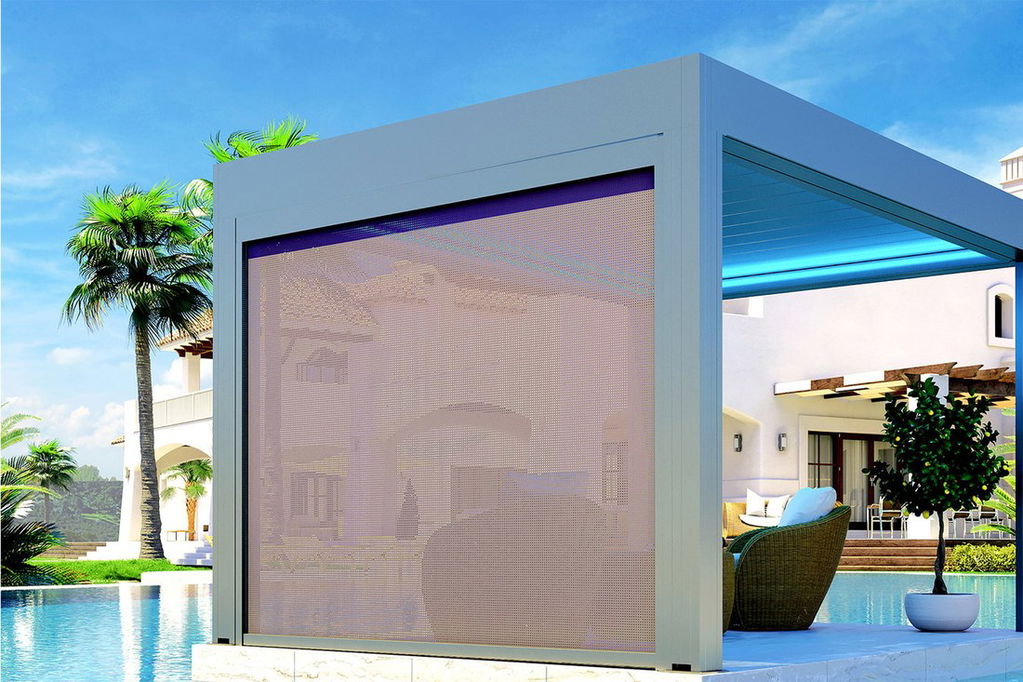
A zip screen is a vertical outdoor blind whose fabric edges carry a zipper-like strip that locks into a channel inside the side guide profiles. Because the fabric is held along both edges, it does not flap in the wind, cannot pull out of the guides and lets no light or insects in at the sides. In winter it is one of the quickest ways to close off a terrace or the open sides of a pergola against wind and rain.
With a conventional vertical awning, the fabric is kept down only by the weight of the bottom bar, so it swings in strong gusts. In a zip system, the fabric runs inside a tensioned frame on both sides, from the cassette at the top to the bar at the bottom. That difference directly decides how much wind the system can take, how long the fabric lasts and how sheltered a terrace stays through the winter months.
What Parts Make Up a Zip Screen System?
The easiest way to understand a zip screen is to take it apart from top to bottom. Each component has its own job, and a weakness in any one of them changes how the whole system behaves:
- Cassette: the aluminum box at the top. It houses the roller tube the fabric winds onto, usually with a tubular motor, and protects the fabric from sun and rain.
- Fabric and zip strip: a strip is welded or stitched to both edges of the fabric. It sits in the channel much like one half of a zipper.
- Side guides: aluminum guide profiles. A plastic insert inside each one holds the strip and lets the fabric slide with little friction.
- Bottom bar: a weighted profile that keeps the fabric taut. A brush or seal on its underside sits on the floor and closes the gap.
- Drive: manual operation suits small openings, while larger openings are usually motorized. Motorized systems can be linked to remote controls, wind sensors and smart home systems.
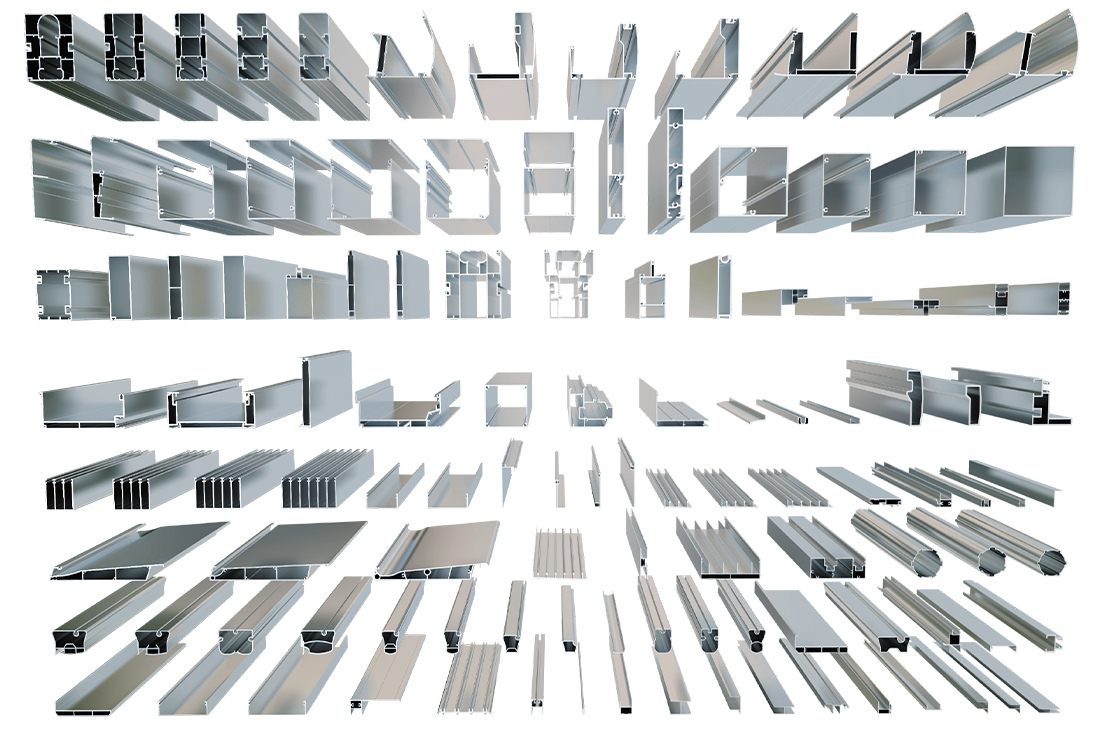
Profile quality is decisive here. The wall thickness of the side guides, the dimensional tolerance of the channel and the stiffness of the cassette determine how smoothly the fabric runs. Kenan Metal's Zip Wintend Vertical profiles provide extruded cassette, guide and bottom bar sections for these systems.
How Well Does It Resist Wind?
A channel-guided screen copes with wind far better than a vertical awning with free edges, because the fabric cannot leave the guides and the wind load is transferred to the side profiles. Its resistance still has limits. As the opening gets larger, the total load on the fabric rises and the fabric bows noticeably inward or outward.
In Europe, external blinds and awnings fall under the EN 13561 product standard. Wind resistance is established with the EN 1932 test method, and the manufacturer declares the wind speed above which the system should be retracted. Asking for this value in writing at the design stage, and fitting a wind sensor on exposed facades, is the safest approach. On days with a storm warning, rolling the fabric into the cassette protects both the fabric and the mechanism better than leaving it down.
What to Watch When Using It in Winter
In the winter months, the main job of these screens is to cut the wind and reduce the rain reaching the terrace. Blocking the wind noticeably raises the perceived temperature and makes terrace heaters work more efficiently. A screen is not thermal insulation, though, and it would be wrong to expect the thermal comfort of a closed glass system.
There are a few practical points to keep in mind in cold weather:
- Clear PVC fabrics stiffen at low temperatures. On very cold mornings, avoid forcing the screen and, if possible, operate it once the air has warmed a little.
- The bottom bar can freeze to the floor overnight. Running the motor while it is iced puts strain on the fabric and the strip, so wait for the ice to melt first.
- Do not leave wet fabric rolled in the cassette for long. Lowering it to dry reduces the risk of mold and staining.
- Keep heaters at the safe distance from the fabric recommended by their manufacturer. This distance varies with the type of heater.
- If snow builds up in front of the bottom bar, clear it before raising the screen.
A zip screen is not a fully watertight enclosure either. In driving rain, small amounts of water can get in at the edges and under the bottom seal. Condensation on the inside of clear panels on cold days is also normal and is reduced by ventilation.
Combining It with Pergolas and Bioclimatic Systems
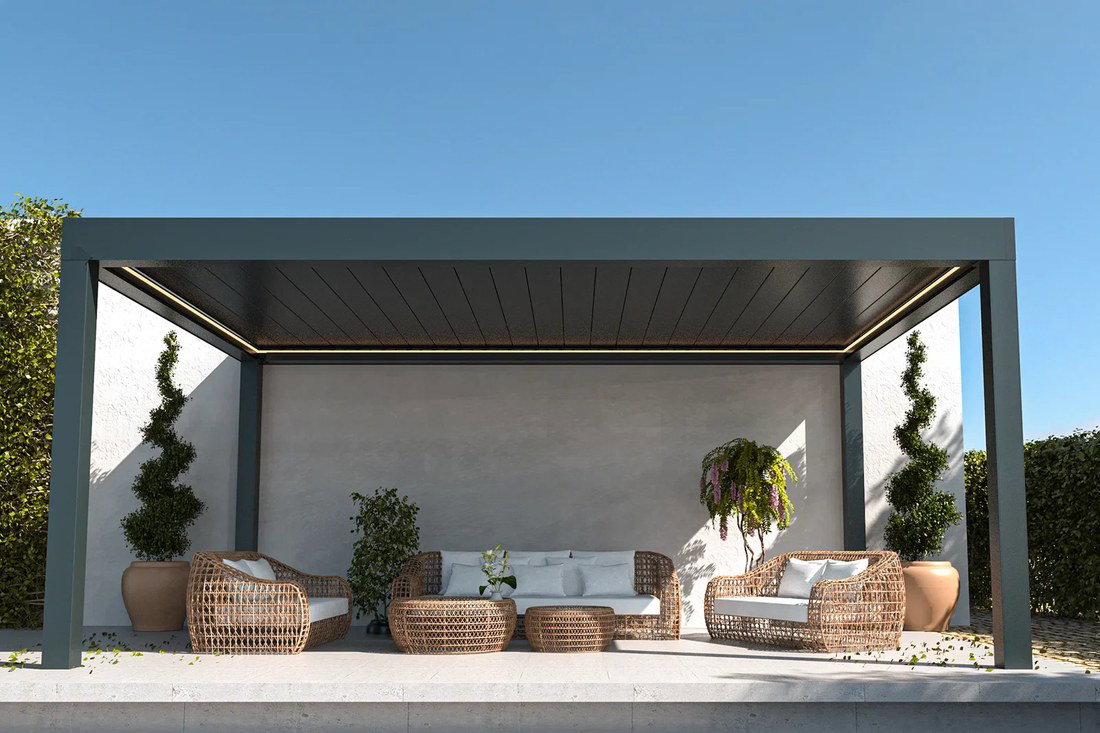
The most common use of the system is closing the side openings between the posts of a pergola. With a watertight roof above and wind-blocking screens at the sides, an open terrace becomes usable through the winter as well. This combination is especially common on restaurant and cafe terraces.
For a clean integration, the screen should be planned as part of the structure rather than an add-on. The cassette can be concealed inside or under the pergola beam and the side guides fixed to the posts. That requires post and beam sizes, drainage channels and power supply to be planned at the start of the project. You can read how louvered roofs work in our article on bioclimatic pergolas, and about the retractable roof alternative in our guide to rolling roof systems.
Color matching is another important detail. When pergola and screen profiles are coated in the same RAL code and the same gloss level, there is no visible shade difference at the joints. Writing the same color specification for both systems in the order prevents mismatches that otherwise show up on site.
Zip Screen or Glass System?
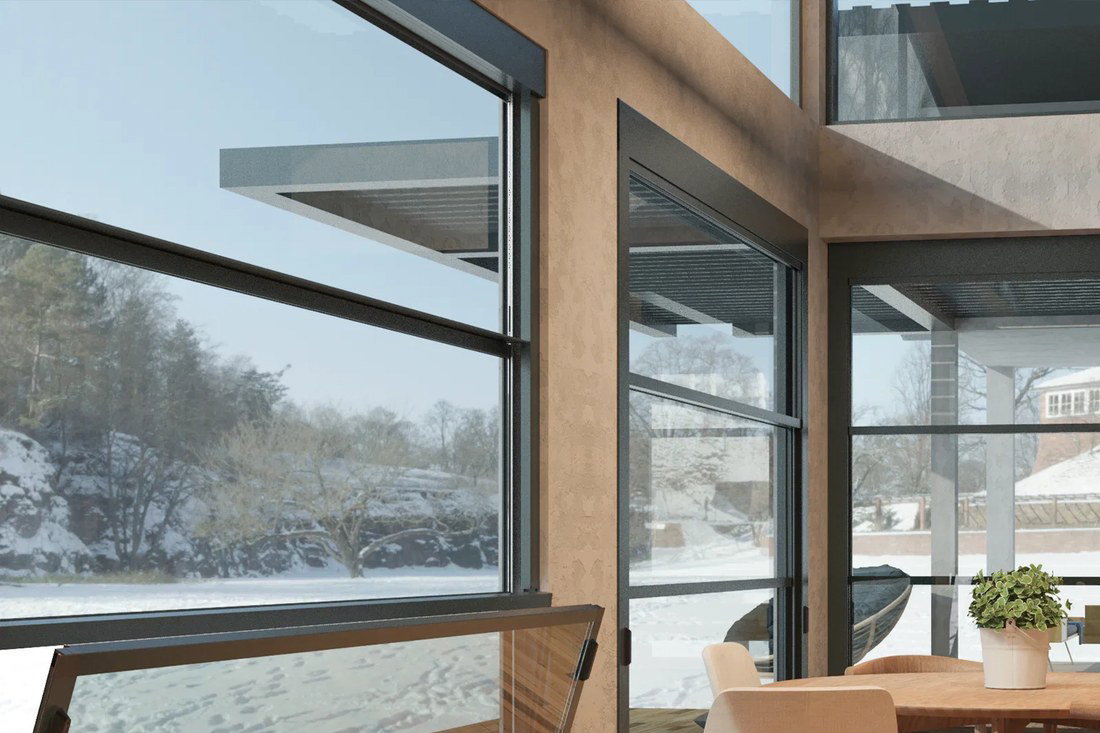
Most people who want to close a terrace for winter end up choosing between a zip screen and a glass system. The two do not do the same job. Which one fits depends on how enclosed the space needs to be in winter and how open it should be in summer.
These differences help with the decision:
- Enclosure: guillotine and sliding glass systems create a space that is more closed against wind and rain. A screen blocks wind but does not fully seal the space.
- Appearance: with the fabric fully retracted, the screen almost disappears. With glass systems, the frames stay in place even when the panels are stacked away.
- Weight and structure: screens are light and easy to add to an existing pergola. Glass systems need a stronger supporting structure and a level floor.
- Sun control: screen fabrics give shade and privacy in summer. Glass lets the sun in and may need extra shading in the warm months.
Many projects use both: glass on the main front and screens on the windy side openings. We cover the glass option for balconies in our article on guillotine glass balcony systems, and fully enclosed living spaces in our article on aluminum winter gardens.
Sizing, Installation and Maintenance
How wide and tall a zip screen can be depends on the fabric type, the profile section and the motor's capacity. For very wide openings, splitting the span into two screens with an intermediate post instead of one large panel improves wind resistance and keeps the fabric flatter. The exact limits should be confirmed from the manufacturer's catalog and with the project engineer.
The most frequent installation mistake is side guides that are not perfectly plumb and parallel to each other. Even a few millimeters of deviation makes the fabric rub in the channel and wears the strip over time. A level floor matters as well; otherwise the bottom bar leaves a gap at one corner and the wind gets in there. On motorized systems, wiring must be done with an ingress protection rating suitable for outdoor use.
Maintenance is simple but should be regular. The channels should be cleared of leaves and dust a few times a year, and the fabric washed with a soft brush and lukewarm water, without abrasive cleaners. The checklist in our article on winter maintenance for pergolas and bioclimatic systems also applies to screens before and after the cold season. The Kenan Metal technical team can help with profile selection and sizing for your project.
Frequently Asked Questions
What is the difference between a zip screen and a vertical awning?
The difference is how the fabric edges are held. On a vertical awning the edges are free or guided by cables. On a zip screen the edges are locked into a channel, which improves wind resistance and sealing.
Does a zip screen keep insects out?
Yes, with the right fabric it does. Because the edges are closed in the channels and the bottom bar sits on the floor, fine-mesh screen fabrics keep most insects out.
What happens to a motorized screen during a power cut?
Standard tubular motors stop during a power cut and the screen stays where it is. Some models offer a manual override or a battery-powered motor, and this need should be stated at the start of the project.
How often does the fabric need replacing?
There is no fixed interval. Fabric life depends on the material, sun exposure, frequency of use and maintenance. When the fabric wears out, the fabric and strip can be replaced without removing the profiles.
Can a zip screen be added to an existing pergola?
In most cases it can. The posts must be plumb and sound, the beam that carries the cassette must take the load and a power line must be available for the motor. Suitability should be checked with measurements on site.