

Powder coating on aluminum profiles is done in three main steps: the surface is cleaned and prepared with chemical pretreatment, electrostatic guns spray the dry powder paint onto the profile, and the profile is held in an oven at a set temperature until the coating cures. Each of these steps is a separate quality gate. If pretreatment is weak, even the best powder will start lifting at the edges after a few winters, and if curing is insufficient the surface may look hard but will crack under impact.
In architectural projects, profile color is usually discussed as a RAL code picked from a catalog. The real question is how long that color will stay the same on a facade, a pergola or a railing next to the sea. Below we walk through what happens inside a powder coating line, which values are measured and what you should check when placing an order.
Why Is Powder Coating So Common on Aluminum?
Powder coating is a solvent-free finish made of solid resin, hardener and pigment. In liquid paint, a solvent carries the binder and evaporates as the film dries, while powder has no such carrier. As a result, emissions of volatile organic compounds are very low, and powder that misses the target in the booth can be collected through filters and cyclones and fed back into the line.
Another advantage for aluminum profiles is thickness control. A thick, even film can be built in a single coat without runs or sags. On pergolas, curtain walls and window systems, where long profiles must be coated in series and in exactly the same shade, this consistency is visible on site. If you are weighing it against anodizing, our article comparing anodizing and painting techniques covers the basics.
Pretreatment: The Invisible Stage That Decides Coating Life
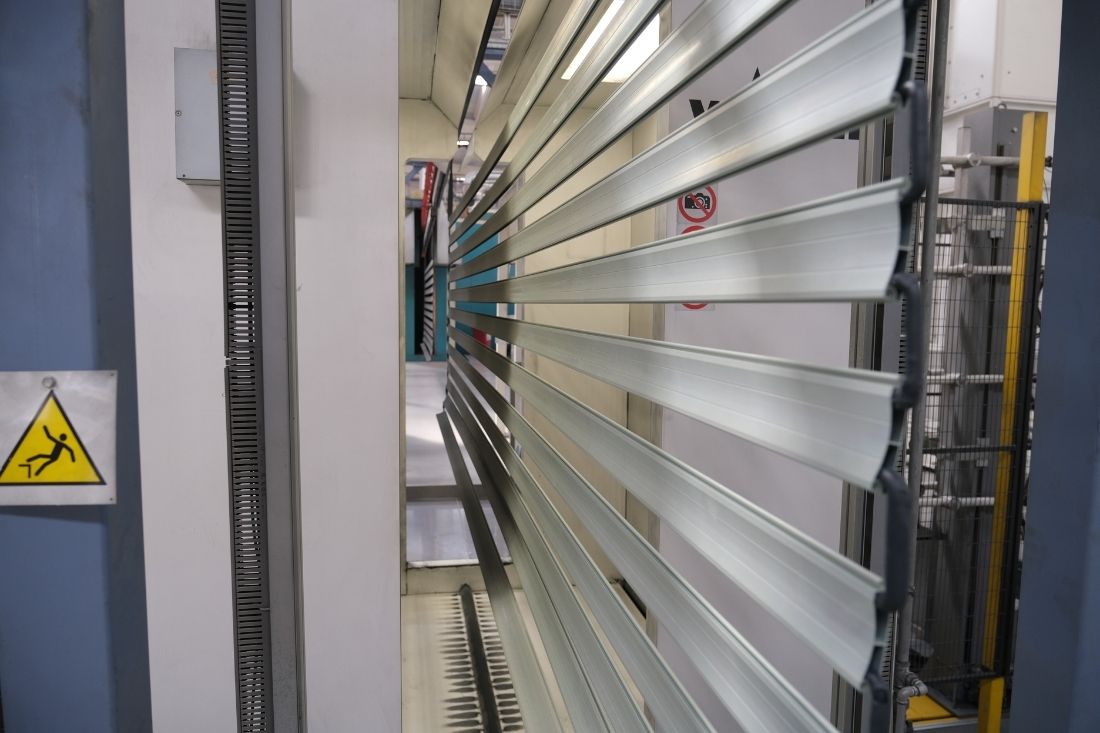
A profile coming off the extrusion press carries oil, dust and a natural oxide layer. If paint is applied over these layers, adhesion stays weak. The job of pretreatment is to clean the surface and to build a stable intermediate layer for the coating to anchor to.
A typical pretreatment line follows this sequence:
- Degreasing: cutting oils and dirt are removed in an alkaline or acidic bath.
- Etching: a controlled amount of metal is removed from the surface, taking away die lines and the unstable oxide layer.
- Rinsing: chemical residues are washed off, with demineralized water used in the final rinse.
- Conversion coating: a thin layer that bonds with the paint is formed on the surface. Chromate conversion used to be the norm; today chrome-free systems based on zirconium or titanium are increasingly standard.
- Drying: the profile must enter the powder booth with no moisture left on it.
The amount of etching matters most in coastal projects. Where chloride ions are plentiful, poorly etched surfaces can develop filiform corrosion, which creeps under the coating in thin, thread-like lines. This is the reason the QUALICOAT specification has a separate seaside class for coastal applications.
How Does Electrostatic Application Work?
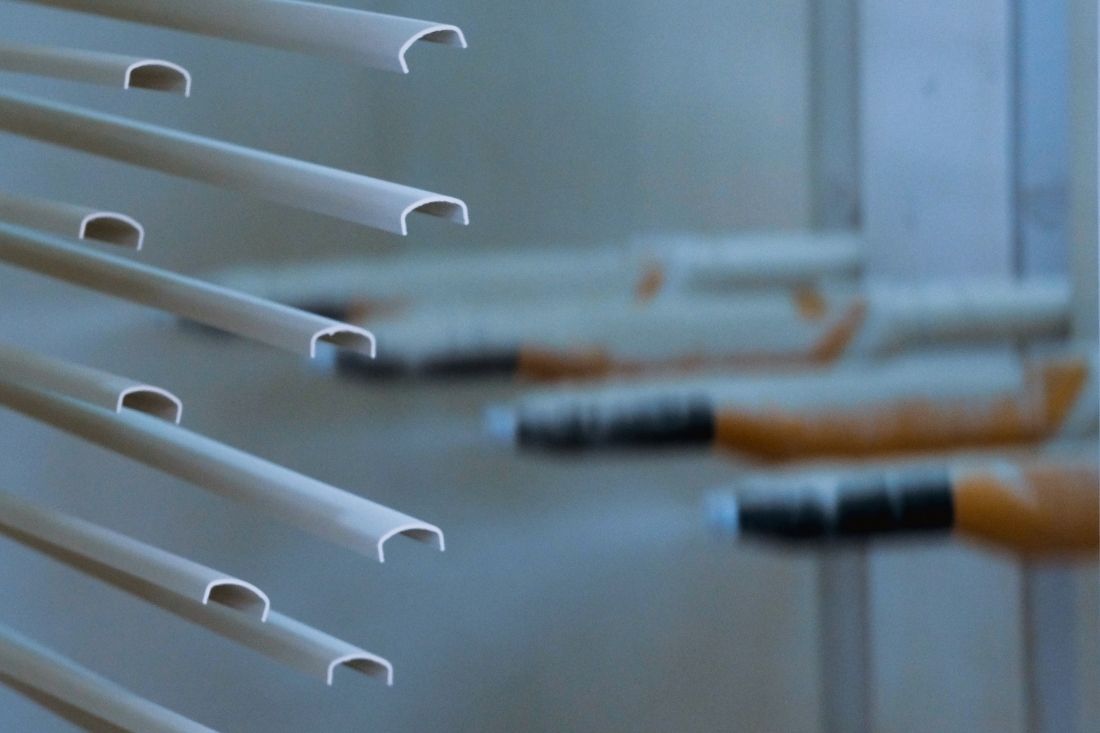
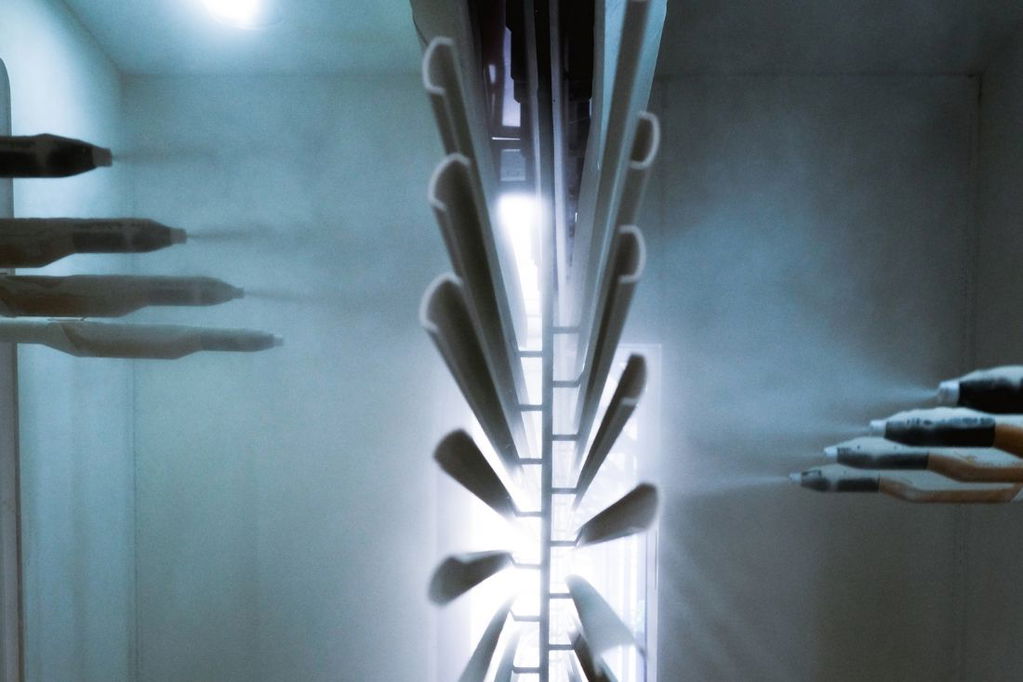
In the booth, the guns give the powder particles an electric charge at high voltage. The grounded profile attracts these charged particles, and the powder settles on the surface like a fine blanket. As the layer builds up, the surface becomes insulating and starts repelling new particles, which helps the film limit its own thickness.
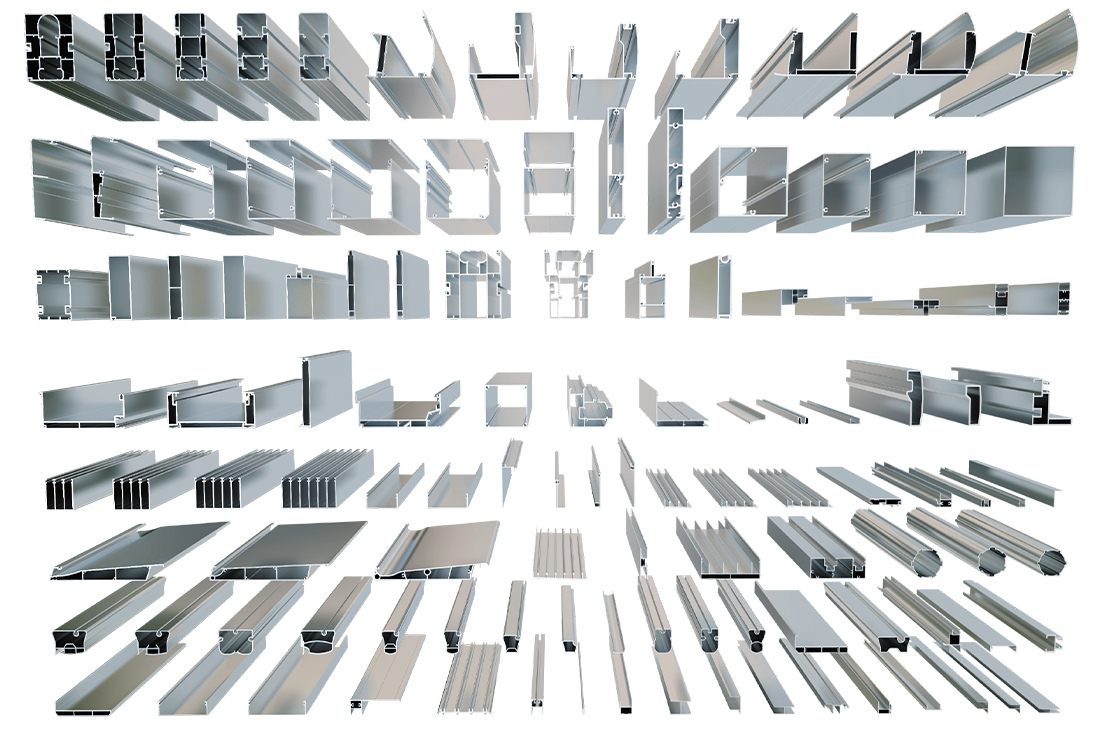
A well-known difficulty of this method is the Faraday cage effect. In deep inside corners and narrow channels the electric field weakens and powder struggles to get in. On pergola and window profiles with complex sections, gun angles, voltage and air flow are therefore tuned to the cross-section, and touch-ups with a manual gun are made where needed.
Profiles travel on vertical or horizontal hangers. Vertical lines save space with long profiles and make it easier to coat both faces evenly. In the Kenan Metal powder coating plant, a Z-type electrostatic booth on a "power and free" conveyor runs alongside a tunnel-type powder line, and the facility is QUALICOAT approved.
Oven Curing
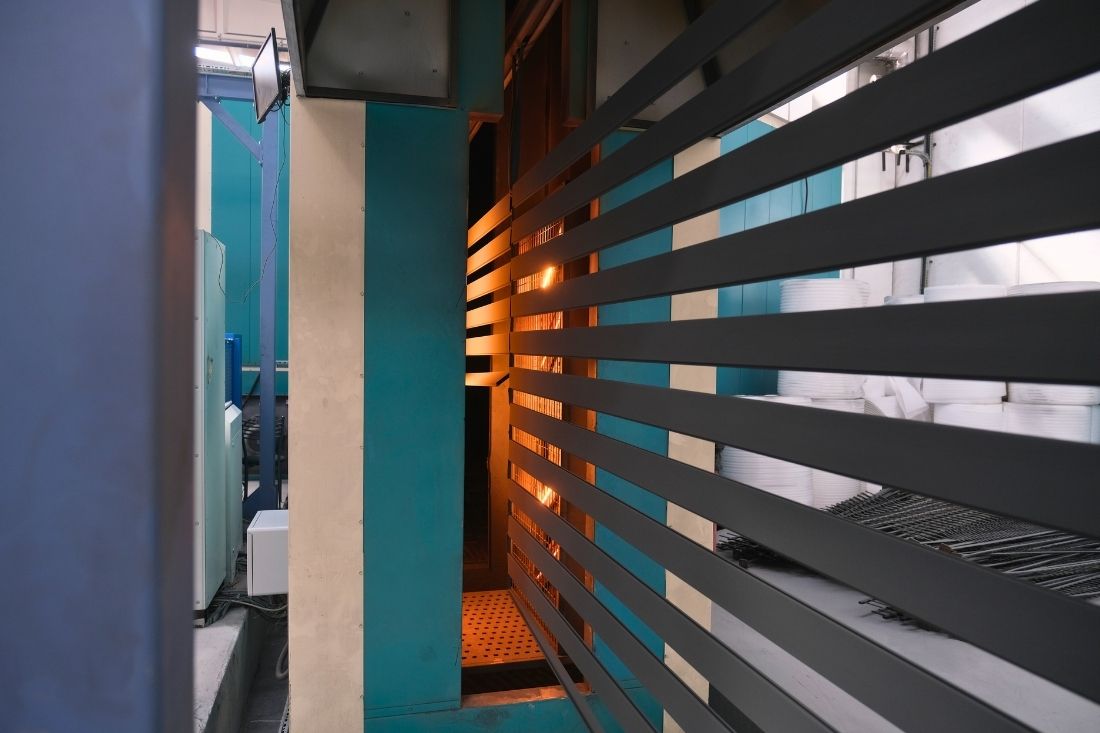
Until it reaches the oven, the powder is only dust clinging to the surface. In the oven it first melts, flows out into a smooth film and then the resin and hardener bond chemically. For architectural polyester powders, a common window is roughly 10 to 20 minutes at a metal temperature of 180 to 200 °C. The exact values come from the cure schedule on the powder manufacturer's technical data sheet.
What counts here is the temperature of the metal, not the oven air. A thick-walled profile heats up more slowly than a thin-walled one. When parts with different wall thicknesses share the same hanger, line speed must be set for the slowest-heating piece. Under-cured paint may look glossy, yet it softens in a solvent rub test and cracks on impact. Over-cured paint tends to yellow and lose gloss.
With heat-treated profiles, oven temperature raises another question. Alloys such as 6063 and 6060 gain their mechanical properties through aging, and an uncontrolled, long thermal load can lower those values somewhat. That is why curing time is not stretched beyond what the powder needs. You can read about the alloy side in our guide on choosing between 6060, 6063 and 6005A and in our article on how heat-treated aluminum works.
Which Values Are Checked in Quality Control?
A visual check is not enough once a coated profile leaves the line. Acceptance of a batch usually calls for the following measurements:
- Film thickness: because aluminum is non-magnetic, it is measured with the eddy current method. A common target in architectural work is an average minimum of around 60 microns, though the exact figure depends on the powder class and the project specification.
- Adhesion: a cross-hatch pattern is cut into the coating, tape is pulled off and the grid is checked for lifted squares.
- Gloss: measured with a 60 degree gloss meter and compared with the matt, semi-gloss or gloss category in the order.
- Color: compared with the approved sample using a spectrophotometer or a standard light booth.
- Cure and durability: solvent rub, impact and bending tests check the flexibility of the film. Salt spray tests are run periodically as well.
For outdoor durability, the powder class also matters. In the QUALICOAT system, Class 1 refers to standard-durability powders and Class 2 to "super durable" powders. Class 1 is based on one year of natural weathering in Florida and Class 2 on three years. For south-facing facades and sunny, high-altitude sites, choosing Class 2 noticeably reduces color and gloss loss over time. You can verify a coater's approval scope on the official QUALICOAT website.
Powder Coated Profiles in Winter Conditions
Winter is the hardest season for coated aluminum. Large swings between night and day temperatures, long periods of humidity, road salt carried by wind and salty mist on the coast all act together. A coating with good pretreatment and correct curing handles this load without trouble. The weak points tend to be cut ends, drilled holes and surfaces scratched during installation.
Wherever a profile is cut or drilled after coating, bare aluminum is exposed. For that reason profiles should be machined before coating whenever possible, and if cutting on site cannot be avoided, the cut face should be protected with suitable touch-up paint or an end cap. Fasteners that are not stainless can start galvanic corrosion beneath the paint.
Cleaning also has a direct effect on service life. Powder coated surfaces should be cleaned with lukewarm water, a neutral detergent and a soft cloth. Abrasive pads, thinners and acidic cleaners should be avoided. In rural areas a yearly clean is often enough, while coastal and industrial sites need shorter intervals. Our winter maintenance checklist for pergolas and bioclimatic systems also covers the care of coated surfaces.
What to Specify When Ordering
To avoid disputes later, a few details should be put in writing at the start of any order for powder coated profiles. The list below covers the main points to share with the manufacturer at the quotation stage:
- RAL or custom color code, gloss level and any surface texture (matt, fine texture, metallic).
- Powder durability class (Class 1 or Class 2) and the project environment: rural, urban, industrial or coastal.
- Which surfaces are visible and where hanger marks are acceptable.
- Minimum film thickness and acceptance criteria.
- Whether profiles will be machined before or after coating.
If a wood or marble look is required, sublimation transfer printing can be applied over the powder coat. Alongside more than 200 RAL and custom color options, the Kenan Metal paint shop also offers antibacterial and anti-graffiti coatings. When comparing suppliers, the questions in our guide on choosing an aluminum extrusion manufacturer will help you ask about certificates and test records.
Frequently Asked Questions
Is powder coating the same as electrostatic painting?
In everyday use the two terms are often treated as the same. Technically, "electrostatic" describes the application method and "powder coating" describes the material. Since liquid paints can also be applied electrostatically, the terms are not exact synonyms.
Can powder coated aluminum be repainted?
Yes, it can. On site, the surface is lightly sanded, cleaned of dust and painted with a liquid system over a suitable primer. In a factory, the old coating can be stripped chemically and the profile pretreated and powder coated again.
Why do color differences appear on powder coated profiles?
The most common causes are different powder batches, different film thicknesses and deviations in oven temperature. Coating all profiles for a project in a single batch and on the same line, where possible, reduces this risk.
Which lasts longer outdoors, powder coating or anodizing?
Both last for many years outdoors when applied correctly. Powder coating stands out for its color range and impact tolerance. Anodizing keeps a metallic look and does not peel when scratched.
Can powder coated profiles be installed outdoors in winter?
They can. The point to watch is that sealants and adhesives, which stiffen in the cold, are applied within the temperature range given by their manufacturers. Keeping profiles under protective film during transport and storage also reduces the risk of scratches.