

What is a T-Slot Aluminum Profile and Where Is It Used?
Learn what T-slot aluminum profiles are, how they are manufactured, their industrial applications, key advantages, common alloys, and why they are the preferred solution for modular engineering systems.
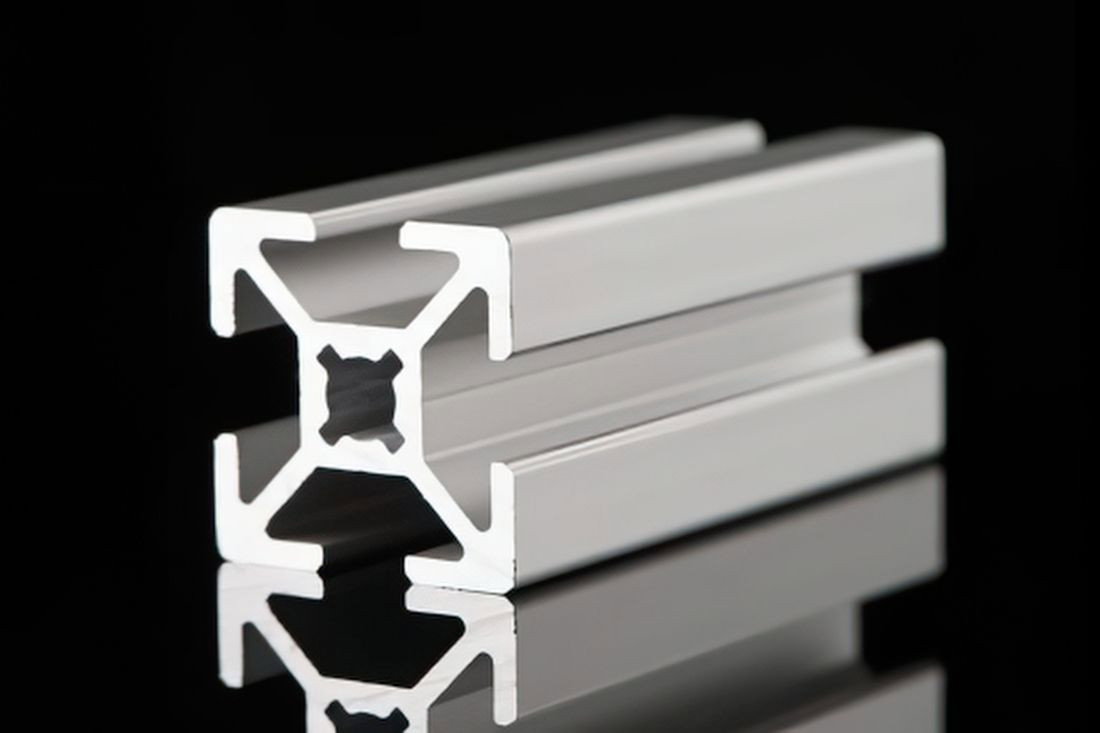
T-slot aluminum profile systems have become one of the most widely used structural solutions in modern manufacturing, industrial automation, machine building, and modular construction. Thanks to their lightweight structure, excellent strength-to-weight ratio, corrosion resistance, and exceptional flexibility, aluminum T-slot profiles allow engineers to build durable frameworks without welding.
From automated production lines and CNC machines to clean rooms, robotics, workstations, solar structures, and protective safety guards, T-slot aluminum profiles have become the standard choice for modular engineering projects. As a leading aluminum extrusion manufacturer, Kenan Metal produces high-quality extrusion profiles with consistent dimensional accuracy and alloy performance that meet demanding industrial requirements.
What Is a T-Slot Aluminum Profile?
A T-slot aluminum profile is an extruded aluminum section designed with longitudinal slots that allow connectors, fasteners, brackets, and accessories to be mounted anywhere along the profile without drilling or welding.
The "T-slot" refers to the characteristic groove that accepts T-nuts and specialized fastening hardware. This design enables rapid assembly, easy modification, and complete reusability throughout the product's lifecycle.
Unlike traditional steel fabrication, T-slot systems can be assembled using standard mechanical fasteners, significantly reducing manufacturing time while increasing design flexibility.
How Are T-Slot Aluminum Profiles Manufactured?
The manufacturing process begins with high-quality aluminum billets that are heated and forced through a precision extrusion die under high pressure. This process creates complex profile geometries with exceptional dimensional consistency.
The production process generally includes:
- Billet preparation and alloy selection
- Precision aluminum extrusion
- Controlled cooling
- Straightening
- Cutting to required lengths
- Optional aging heat treatment (T5/T6)
- Surface finishing such as anodizing or powder coating
Profile quality depends heavily on billet purity, extrusion precision, die engineering, and process control. Manufacturers with integrated extrusion capabilities can maintain tighter tolerances and superior mechanical performance.
For a deeper understanding of extrusion manufacturing, read our guide on Aluminum Extrusion Profile Properties.
Why Aluminum Is the Preferred Material
Excellent Strength-to-Weight Ratio
Although aluminum weighs approximately one-third as much as steel, properly designed extrusion profiles provide remarkable structural strength while significantly reducing overall system weight.
Outstanding Corrosion Resistance
Aluminum naturally forms a protective oxide layer that resists corrosion even in humid or outdoor environments. Additional anodizing further improves durability and appearance.
Easy Assembly Without Welding
T-slot systems eliminate welding, grinding, painting, and complex fabrication. Components are assembled using standardized connectors, allowing projects to be completed faster while maintaining high precision.
Fully Modular Design
One of the greatest advantages of T-slot profiles is unlimited modularity. Additional sections, accessories, or equipment can be integrated later without redesigning the entire structure.
Reusable and Sustainable
Unlike welded steel structures, aluminum profiles can be disassembled and reused multiple times. This reduces material waste while supporting sustainable manufacturing practices.
Learn more about sustainable aluminum manufacturing in our article Sustainability and Aluminum.
Common T-Slot Profile Sizes
Industrial T-slot systems are available in numerous cross-sectional dimensions depending on load requirements.
| Profile Size | Typical Applications |
|---|---|
| 20 × 20 mm | Light-duty frames, electronics, laboratory equipment |
| 30 × 30 mm | Machine guards, automation systems |
| 40 × 40 mm | Industrial workstations, conveyors |
| 45 × 45 mm | Heavy-duty automation systems |
| 45 × 90 mm | Machine bases and structural frames |
| 80 × 80 mm | Large industrial structures |
Profile selection depends on expected loads, span lengths, dynamic forces, and connection methods.
Where Are T-Slot Aluminum Profiles Used?
Industrial Automation
Automation manufacturers use T-slot profiles to build robot cells, conveyor systems, assembly stations, sensor supports, and automation frames.
Machine Frames
CNC machines, packaging equipment, laser systems, inspection machines, and production machinery frequently rely on aluminum profile structures.
Safety Guards
Machine safety enclosures built with aluminum profiles provide visibility, flexibility, and compliance with industrial safety standards.
Workstations
Modern ergonomic production workstations can be customized with shelves, lighting, monitors, cable management systems, and adjustable accessories.
Clean Rooms
The smooth surface of aluminum profiles makes them ideal for pharmaceutical, medical device, electronics, and semiconductor manufacturing environments.
Solar Energy Systems
Solar panel mounting structures benefit from aluminum's corrosion resistance and lightweight characteristics while maintaining excellent structural integrity.
Laboratory Equipment
Research laboratories use T-slot profiles to construct modular testing equipment, instrument supports, and custom experimental setups.
Advantages Compared with Welded Steel Structures
| Feature | T-Slot Aluminum | Welded Steel |
|---|---|---|
| Assembly Speed | Very Fast | Slow |
| Modification | Easy | Difficult |
| Weight | Light | Heavy |
| Corrosion Resistance | Excellent | Requires coating |
| Reusability | Excellent | Limited |
| Maintenance | Low | Higher |
Choosing the Right Alloy for T-Slot Profiles
The performance of an aluminum profile depends not only on its geometry but also on the alloy used during extrusion.
For industrial profile applications, common alloys include:
- 6063 — Excellent surface quality and architectural applications
- 6060 — High dimensional accuracy for precision profiles
- 6005 — Higher structural strength for heavy-duty systems
- 6082 — Superior mechanical performance for demanding engineering projects
Heat treatment conditions such as T5 and T6 further improve mechanical properties according to application requirements.
Engineering Considerations Before Selecting a T-Slot Profile
Choosing the right profile involves more than selecting a standard size. Engineers should evaluate:
- Expected static and dynamic loads
- Maximum deflection limits
- Span length between supports
- Connection methods
- Future expandability
- Environmental conditions
- Required surface treatment
- Accessory compatibility
Proper engineering ensures long-term structural stability while minimizing material usage and production costs.
Why Manufacturing Quality Matters
Not every aluminum profile offers the same level of performance. High-quality extrusion depends on billet purity, precision die design, controlled extrusion parameters, heat treatment consistency, and strict dimensional inspections.
Manufacturers with advanced extrusion technology can achieve superior straightness, tighter tolerances, excellent surface finish, and repeatable mechanical properties—critical factors for automation and precision engineering.
Kenan Metal combines modern extrusion capabilities with advanced quality control processes to produce aluminum profiles that meet international industrial standards across a wide range of applications.
Discover why aluminum continues to shape modern engineering in our article Why Aluminum Is the Preferred Material for Modern Architectural Systems.